Why a $150 Million Penthouse Needs No Brand Name Beyond ‘Zaha Hadid’
Why a $150 Million Penthouse Needs No Brand Name Beyond ‘Zaha Hadid’

|
Getting your Trinity Audio player ready...
|
Last week, I toured half a dozen branded residential sales galleries across South Florida. Most were lovely. Some were grand. All had a logic to them, a formula of gleaming models, marble samples, and the comforting promise of a globally recognized name: Ritz-Carlton, St. Regis, Viceroy.
Then, I went to see The Delmore.
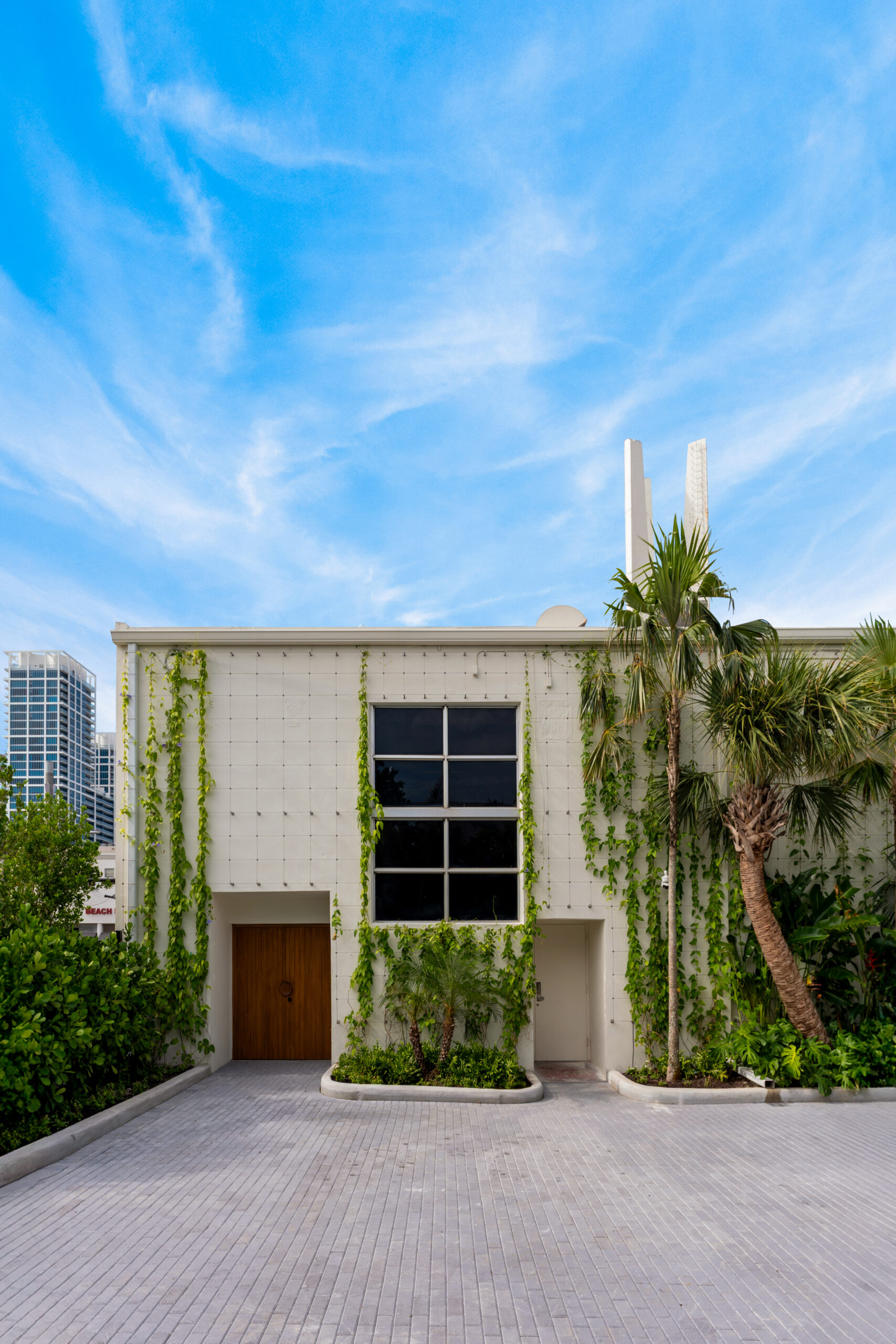
The first clue that this was a different species of offering came with the parking instructions. For every other appointment, we’d simply pulled up and found a spot. For The Delmore, the late Zaha Hadid’s first residential masterwork in Florida, the protocol was explicit. We were to call Director of Sales Tara West upon arrival at the gated entrance of an unmarked building in Miami Beach.
I sent a text. A security guard appeared, verified our names against a list we were not on, and the heavy gate arm swung up. We parked in a silent, private courtyard. The message was not subtle: you are not a shopper here. You are a guest, granted provisional access to a future that is already fiercely protected.
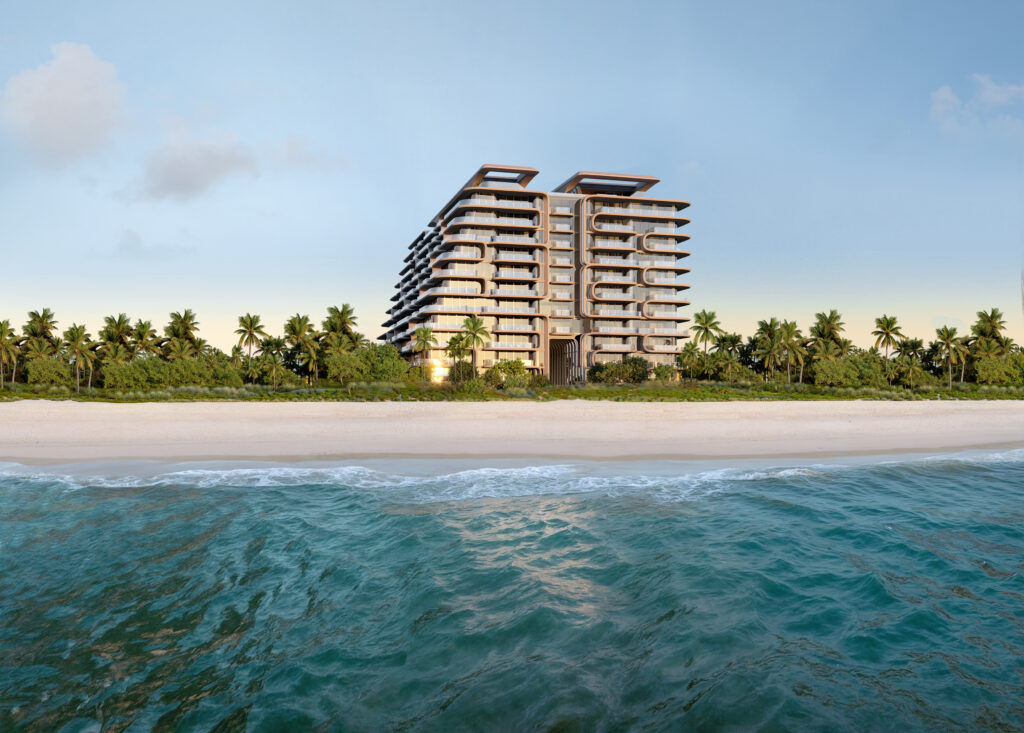
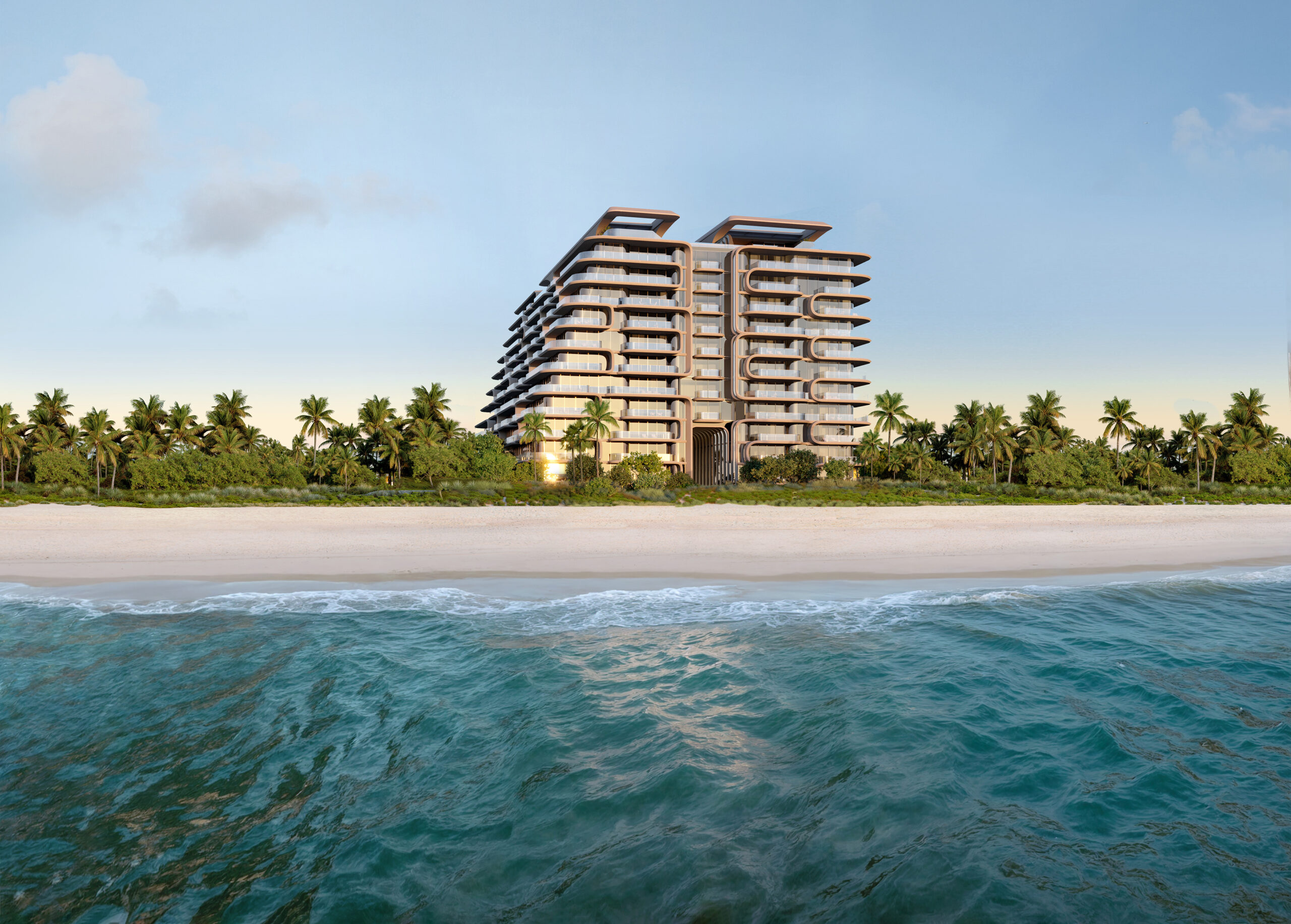
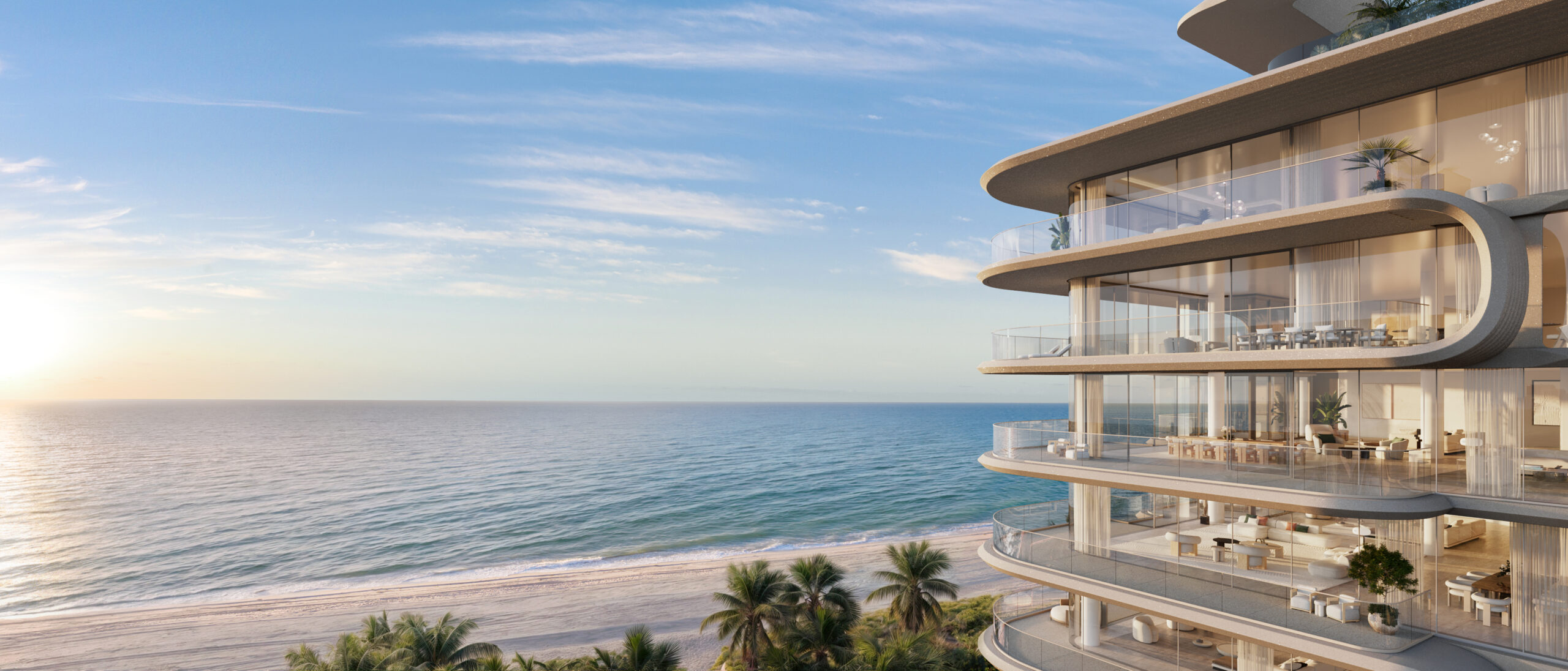
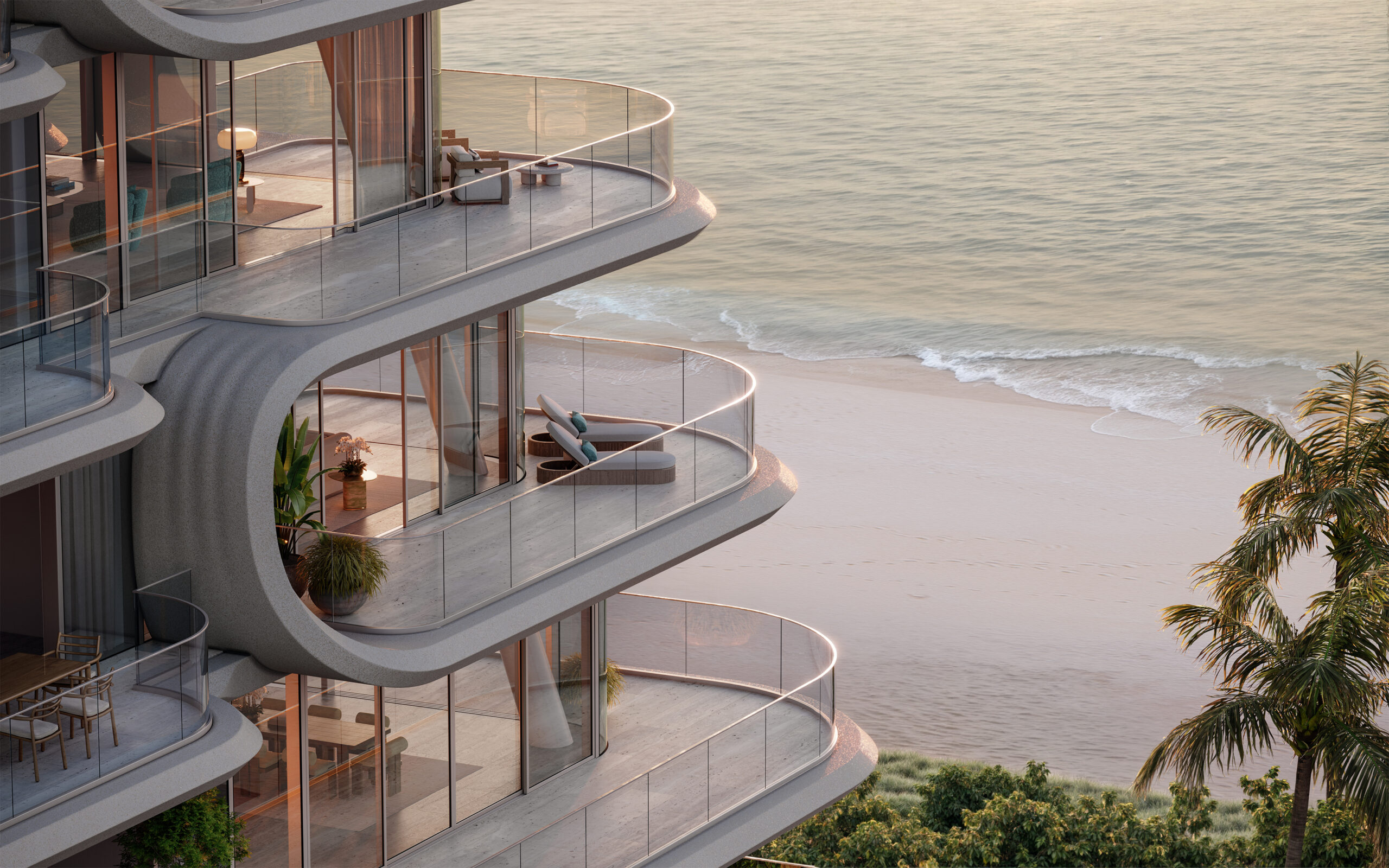
This meticulously staged arrival is the core philosophy of what may soon be Miami’s most expensive address. A penthouse here is poised to ask $150 million. Developed by Dubai-based DAMAC International in Surfside’s “Billionaire’s Triangle,” The Delmore represents a clean break from the branded luxury we’ve chronicled for years. It answers a new, sharper question: What does the ultra-high-net-worth individual want when the comfort of a hotel brand is no longer enough? The answer, it seems, is a sovereign work of art with a biometric lock.
Credit: 1 OAK Studios / Branded Living Team on far right.
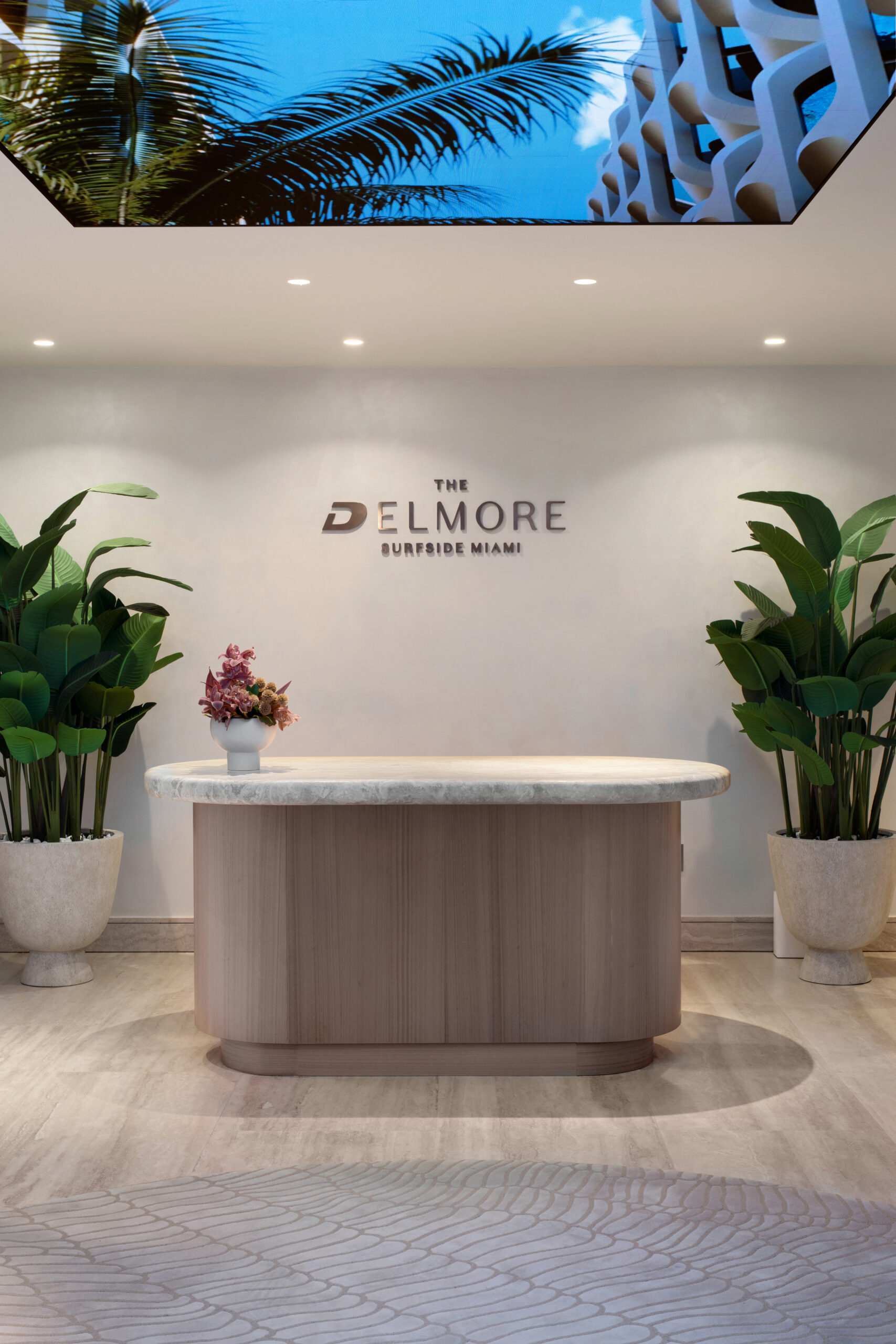
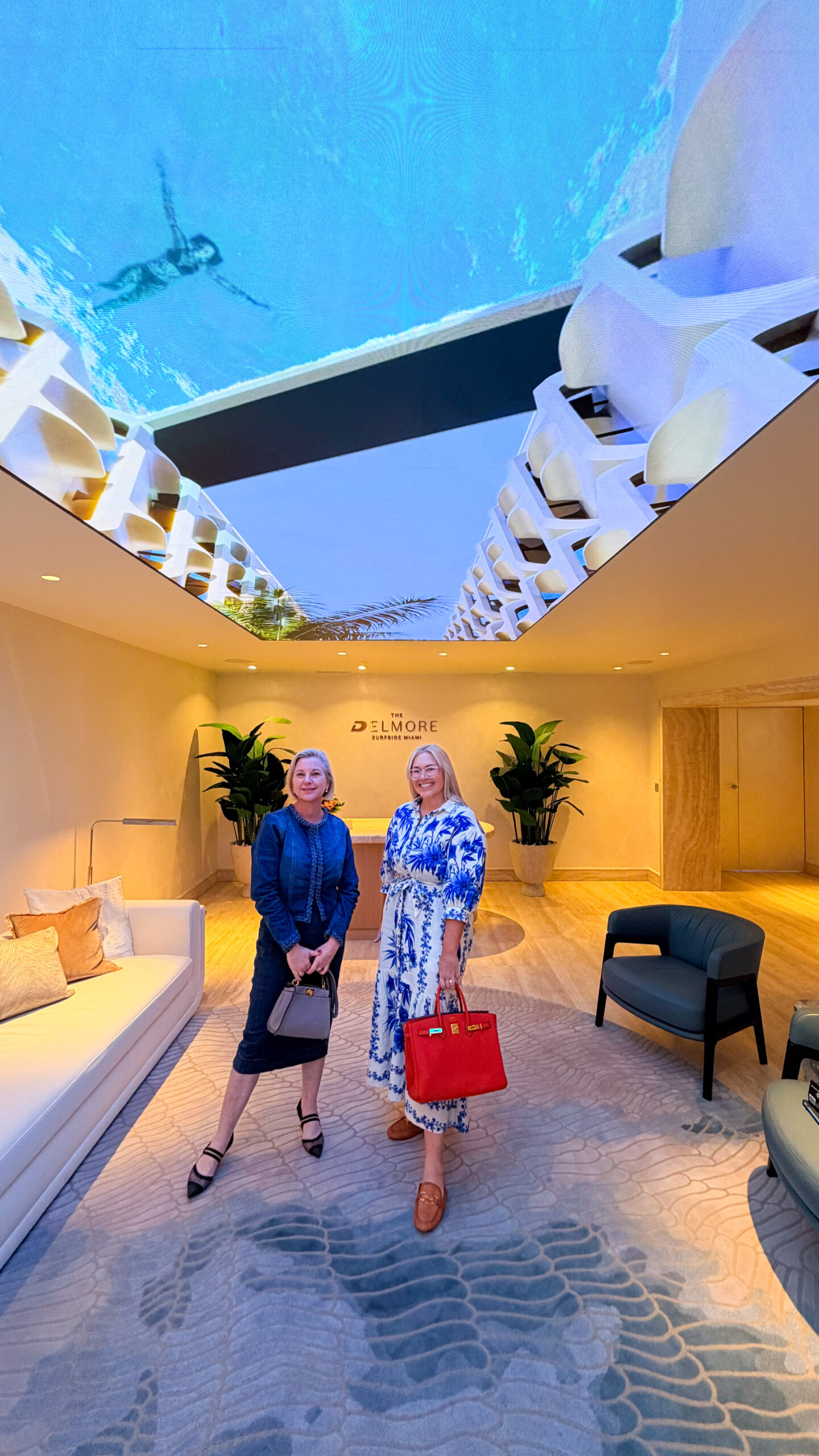
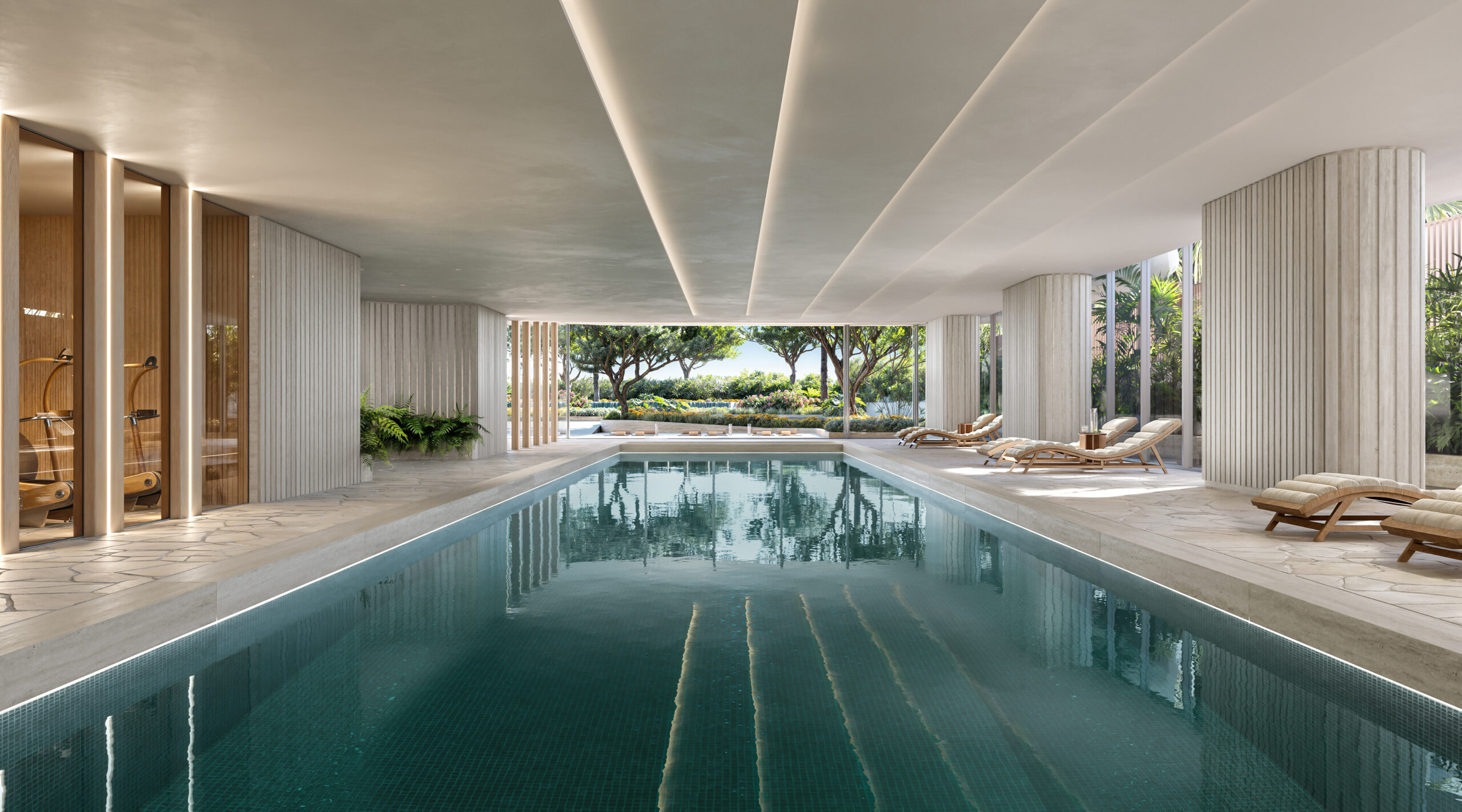
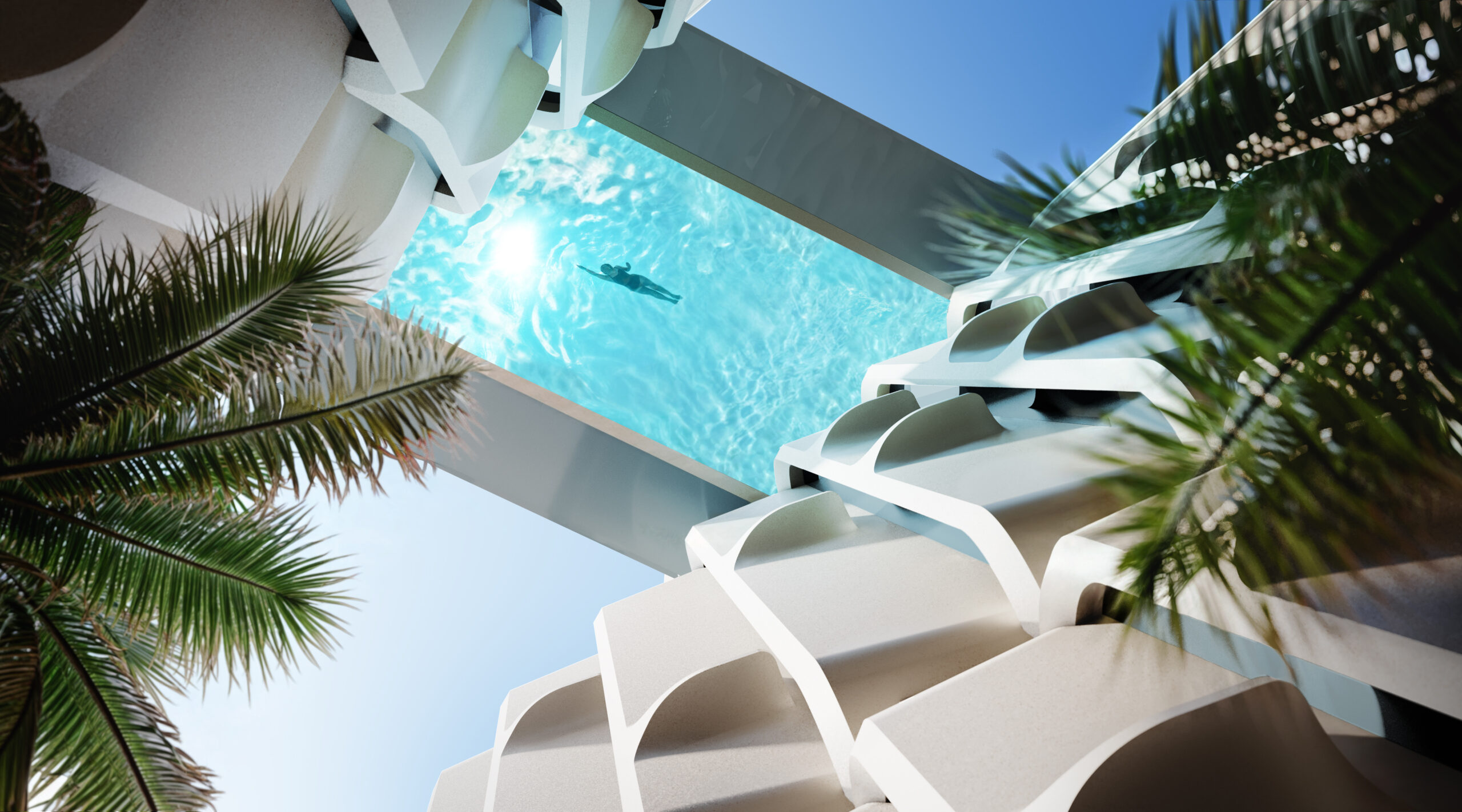
Passing through a door shrouded in greenery, we left the Miami sun behind and entered a cool, darkened corridor. The ceiling above us was no longer drywall, but a 75-foot digital lagoon. A shimmering mermaid swam languidly across its length, a hypnotic preview of the building’s pièce de résistance: a sky-high translucent pool, an engineering marvel that will hang like a piece of kinetic art over the city. I felt less like a publisher and more like a character being woven into a film’s opening sequence, a James Bond film, specifically, where the protagonist’s hideout is also an architectural digest cover.
“The world is truly enamored with Miami as a primary home destination,” Tara West told us later, her calm demeanor a contrast to the sensory overload of the gallery. “This offering is unrivaled.”
Unrivaled, I learned, is a function of absolute control. The 37 “mansions in the sky” will be accessible only via biometrics, retinal or facial scans from the moment your car enters the garage. The security is designed by a Washington D.C. firm with protocols worthy of a state secret. There are no keys. There is only your identity, verified against a digital fortress.
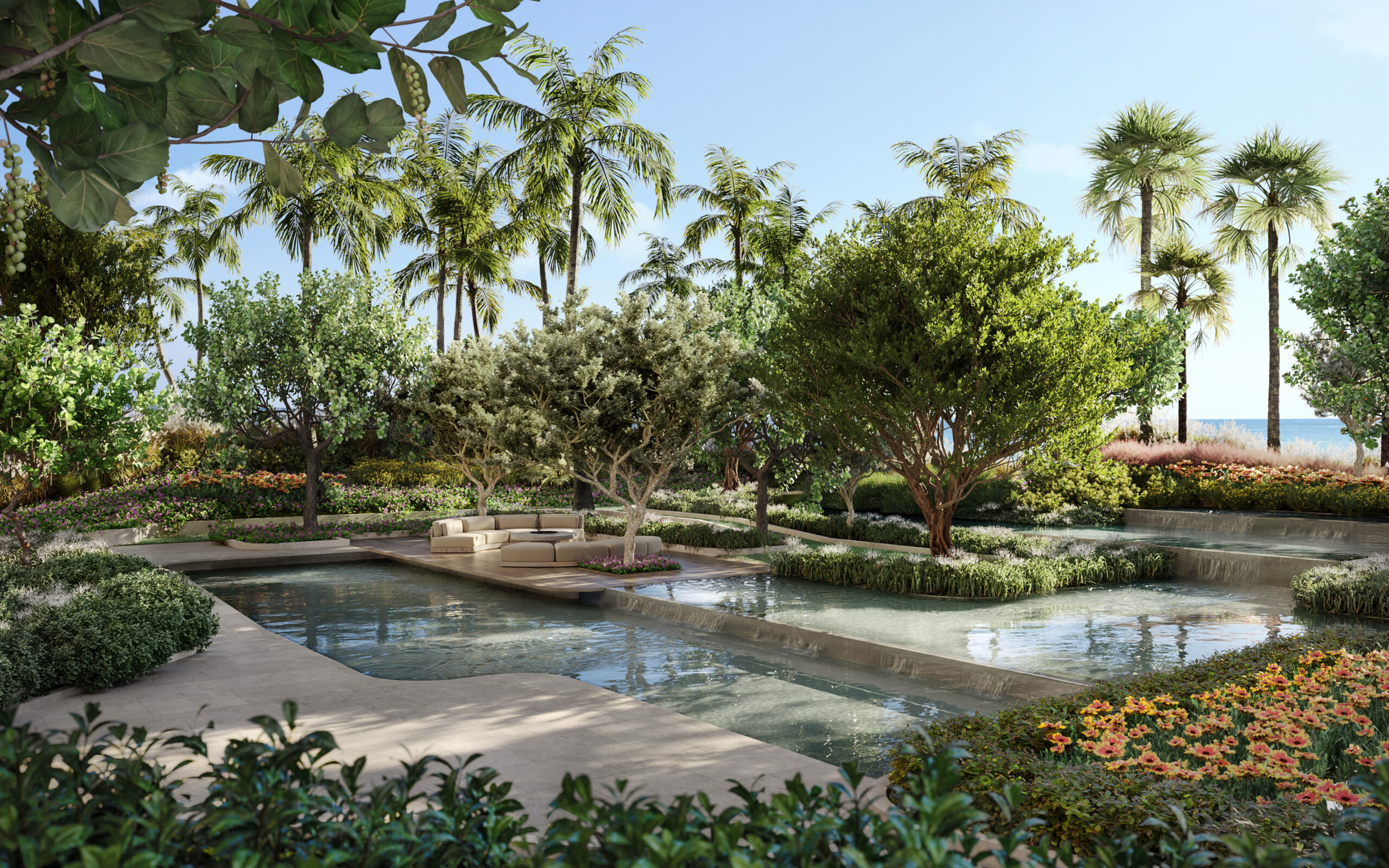
What struck me was how this fortress mentality was poetically disguised. In the scale model, we studied the tiered Zen garden, a cascade of waterfalls and exotic foliage. It was breathtaking, but its beauty was tactical. It’s designed as a topographic blind, making residents invisible from the public beach while also serving as a natural barrier against storm surge. Here, every aesthetic choice has a second, silent purpose: to shield.
The crescendo of the tour was a private screening room. Awaiting us were crystal glasses of Italian mineral water, a spread of fresh fruit, and delicate pastries. We watched a sales video with production values that could rival a Hollywood trailer. Afterwards, we were shown the collaboration space; a serene, tech-forward room where approved buyers sit with specialists to select finishes and tweak layouts in real time. This isn’t customization; it feels like being granted a dialogue with the ghost of Hadid herself, a chance to co-author a line in her final, fluid stanza.
Jeffery Rossely, DAMAC’s SVP of Development, called it “the next generation of luxury.” I scribbled in my notebook: No, it’s a new genus.
Sitting there, I realized The Delmore is built for a different kind of collector. This buyer’s portfolio already includes Blue-Chip art and vintage Ferraris. They don’t need the familiar crutch of a hotel brand’s service promise. They crave the cultural capital of owning a habitable masterpiece, a sealed ecosystem of art and privacy. The brand is the architect’s immortal, unmistakable signature.
Walking back out into the humid Miami afternoon, the gate closing silently behind us, the contrast was jarring. The other sales galleries, strategically placed in bustling high-end malls, were designed to lure you in. The Delmore is designed to keep you out—until you are one of the 37.
As it rises toward a 2029 completion, The Delmore is more than another branded building. It’s a manifesto for the future of ultra-luxury: that the ultimate exclusivity isn’t a famous logo on the door, but a masterpiece you need a retinal scan to enter.
Credit: BINYAN
Take our 60-second quiz and discover luxury properties matched to your lifestyle
Start the Quiz