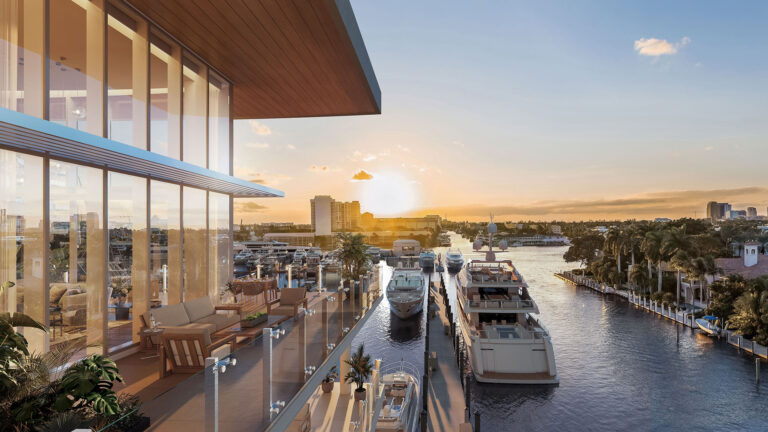
Luxury, for me, is often about what you choose not to add
ALESSANDRO MUNGEFOUNDER AND PRINCIPAL STUDIO MUNGE
Founder and Principal of Studio Munge, Alessandro Munge is one of North America’s most sought-after designers. For over 20 years, his curiosity and drive to provoke profound emotion have pushed him beyond convention, leading teams in Miami and Toronto with a culture of listening, questioning, and authentic storytelling.
As an architect of experience, he blends architecture, landscape, interior, and product design into expertly crafted furniture, prestigious 5-star hotels, and luxury residences defined by design excellence.
“As a first-generation immigrant, I came from very humble beginnings and grew up fast. I never had much to lose, and that made me fearless. Creators need a voice. We must be curious and brave; it takes courage to question the norm and bring forth uniqueness.”
His innovative point of view has earned him over 150 international design awards, including Interior Design’s Leader in Hospitality, ICFF’s Designer of the Year, and the Toronto Metropolitan University Alumni Achievement Award. Alessandro approaches every project holistically, balancing practicality, artistic expression, and human connection.
“Our design philosophies are informed by decades of global exposure, driving our signature guest experiences. With empathy for communities and genuine care, we define the success of a project as the creation of equally long-lasting memories and businesses.”
Branded Living: How did you approach the design of this project?
Alessandro Munge: We approached the project first and foremost as a residential experience rather than a hospitality experience. The Ritz-Carlton Residences, South Beach brings with it an extraordinary legacy of service, quality and refinement , but our goal was to translate those values into something that feels genuinely like home.
For me, luxury residential design is ultimately about how someone lives. It needs to feel intuitive, personal and effortless. At South Beach, we wanted to create interiors that have the sophistication expected of The Ritz-Carlton, while still feeling relaxed, warm and connected to Miami. There is a quiet confidence to the design rather than overt expression of luxury.
BL: How did you integrate your design ideas into the project’s architecture?
AM: I never really see architecture and interiors as separate disciplines. The strongest environments are created when the two are conceived as one continuous experience.
We looked carefully at the architectural language, the proportions, the natural light, the views and the relationship between interior and exterior. From there, we developed an interior architecture that responds to those conditions rather than simply decorating them.
Material transitions, millwork, lighting, furniture placement and nightlines were all considered as part of the architecture. The objective was for the interiors to feel as though they naturally being to the building.
BL: What were your inspirations?
AM: South Beach itself was obviously as important influence, but we deliberately avoided interpreting Miami too literally.
I was more interested in the emotional qualities of the location: the incredible light, the softness of the landscape, the movement of the water, the horizon and that very particular sense of indoor-outdoor living.
There is also something beautifully relaxed about Miami. We wanted to capture the spirit while bringing a level of refinement and restraint that feels appropriate to The Ritz-Carlton. The result is less about referencing a particular style and more about creating a feeling of contemporary coastal living that is sophisticated, timeless and very natural.
BL: What particular challenge did you face?
AM: One of the most interesting challenges with branded residences is finding the right balance between brand identity and individuality. People purchasing at this level are sophisticated. They want the service and standards associated with The Ritz-Carlton, but they also want a residence that feels personal and authentic rather than an extension of an hotel.
Our challenge was therefore to interpret the DNA of the brand through a residential lens. It required restraint. Rather than relying on obvious gestures, we focused on proportion, craftsmanship, materiality and the quality of the experience.
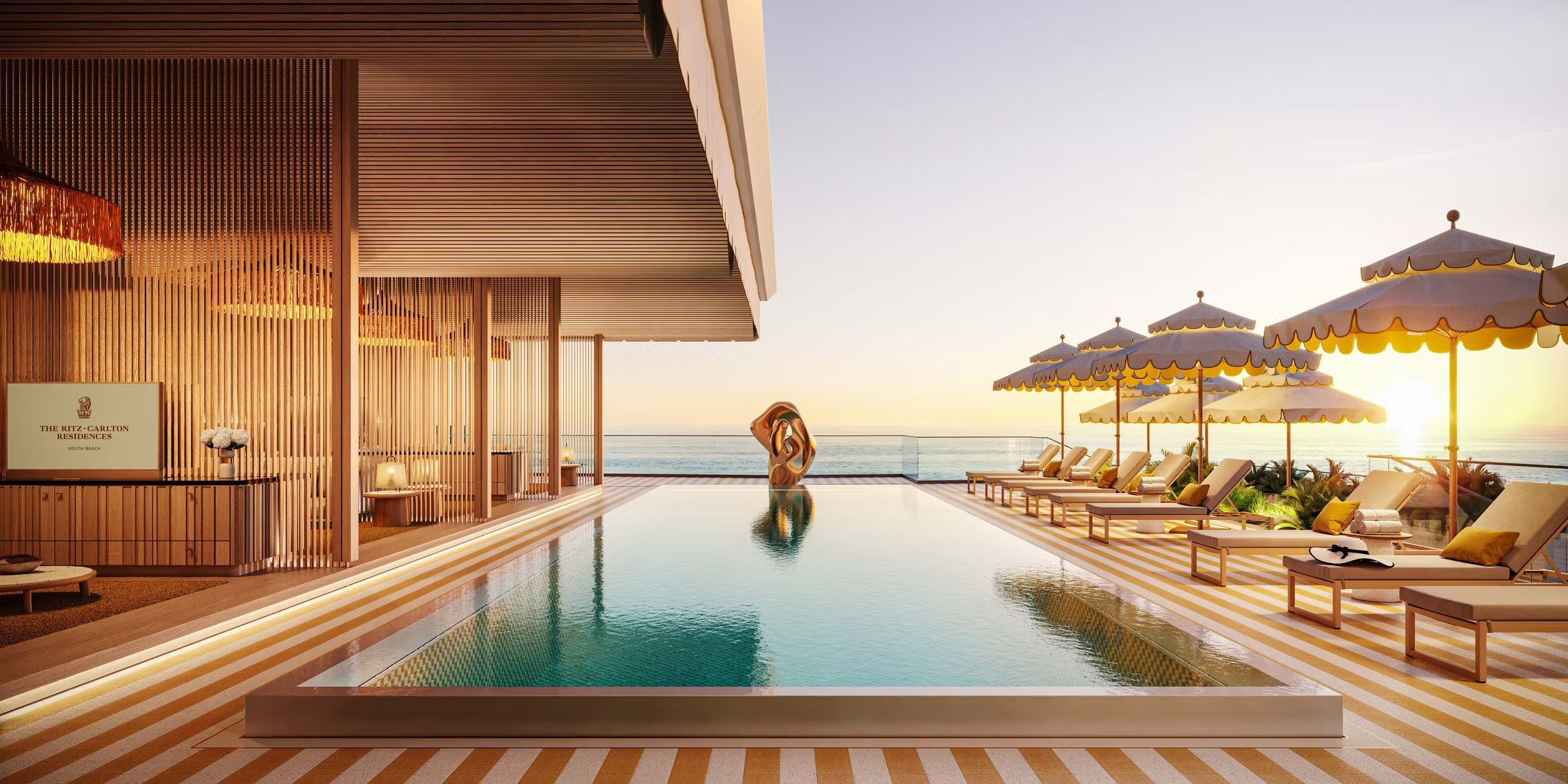
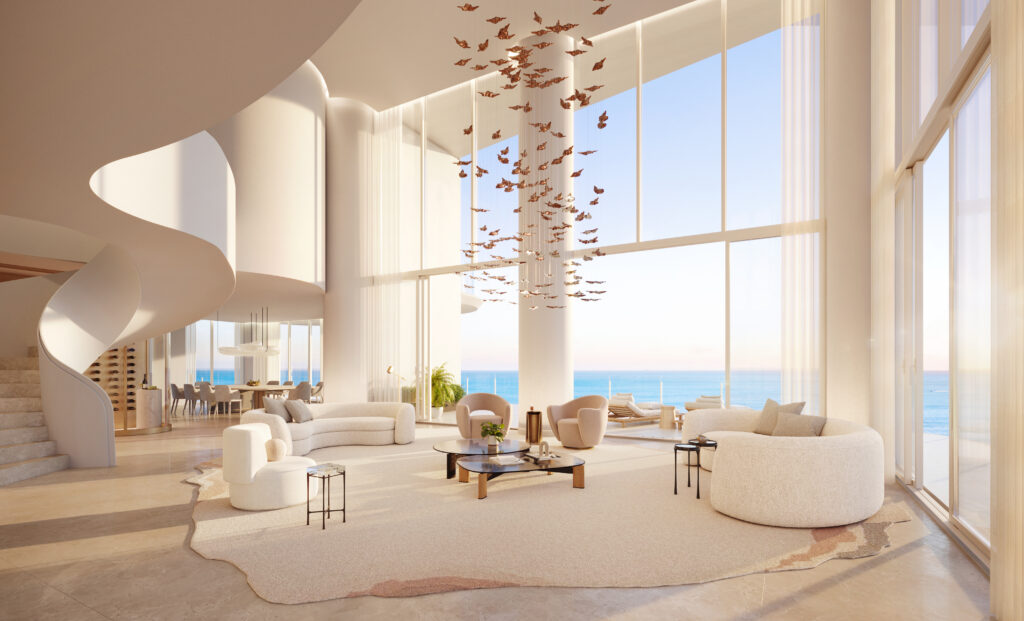
BL: Looking at this rendering, can you describe the themes, colors, furnishings, and overall effect you were aiming to achieve?
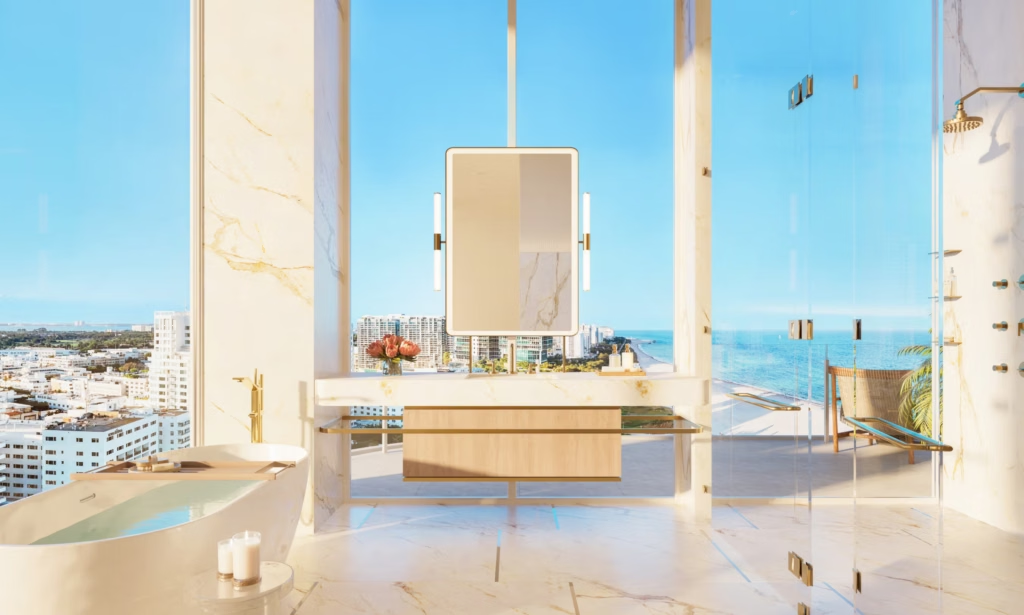
AM: The palette is intentionally quiet and layered. We worked with warm neutrals, natural woods, stone, soft textiles and subtle tonal variations got create depth without visual noise.
The furnishings have a sculptural quality, but they are also comfortable and approachable. There is a softness to the forms that contrasts with the more architectural elements of the space.
Rather than having one element dominate, we wanted the room to reveal itself gradually through texture, proportions craftsmanship and light. Ultimately, the effect should feel calm, sophisticated and effortless. Luxury, for me, if often about what you choose not to add.
BL: How did the South Beach setting and proximity to the beach influence your approach to the interiors?
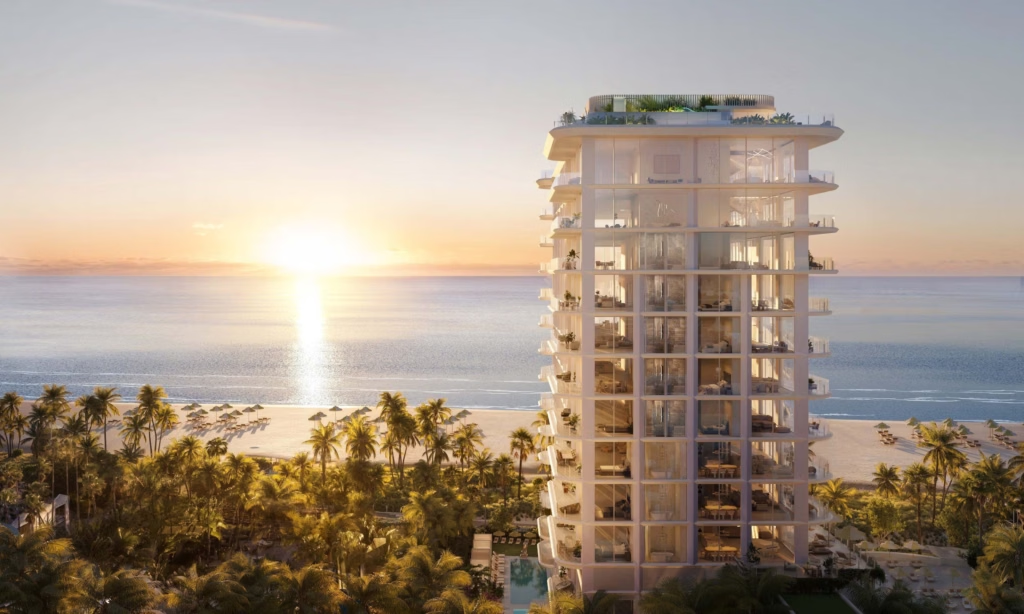
AM: The ocean is such a powerful presence that we felt then interiors should complement it rather than compete with it. The palette, materiality and planning are all intended to work with the changing natural light throughout the day and create a sense of continuity between inside and outside.We introduced warmth and tactility through natural materials while keeping the overall composition light and restrained.
I didn’t want to create a stereotypical “beach” interior. The connection to South Beach is more atmospheric. It is the lightness, the movement, the relaxed elegance and the way the spaces frame the landscape and water beyond.
Ultimately, we wanted residents to feel that they are living somewhere distinctly connected to Miami, but in a way that remains sophisticated and timeless.