Four Seasons Private Residences Las Vegas hits $850 million in sales, as Henderson’s MacDonald Highlands emerges as the Strip’s quiet luxury alternative.
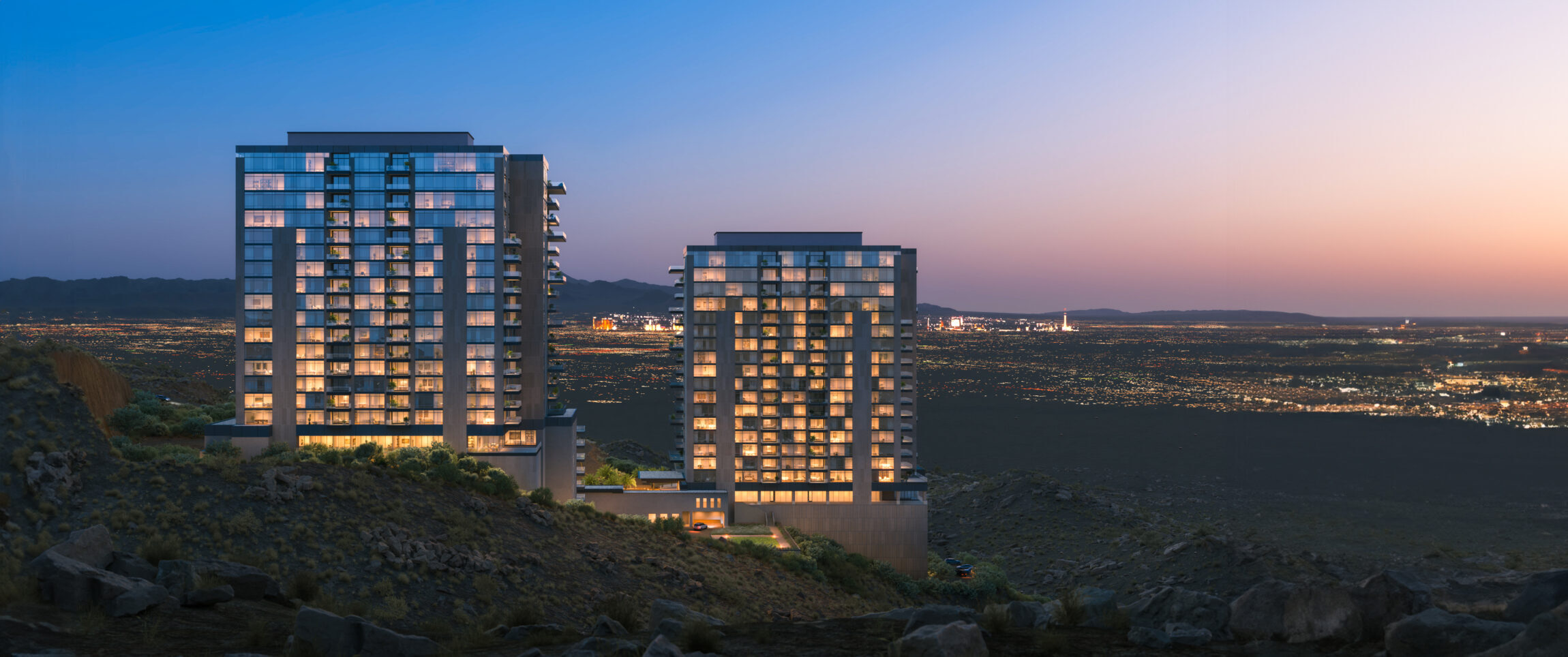
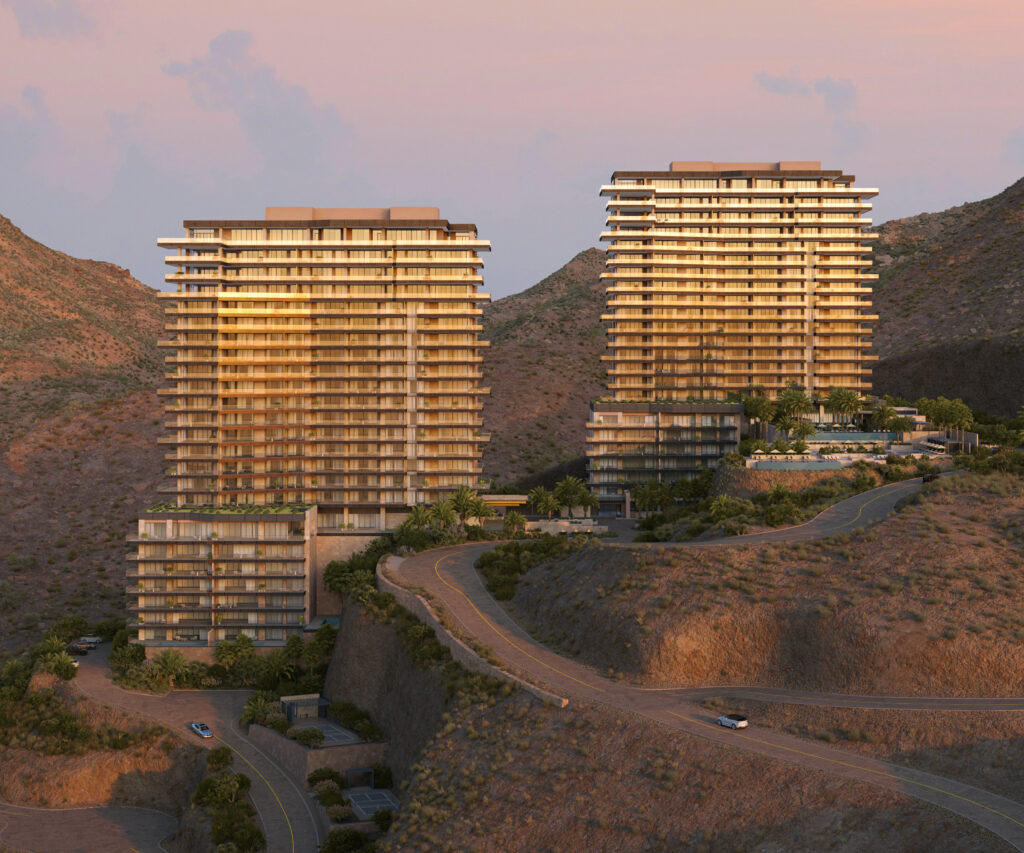
There’s a particular kind of Las Vegas story that never makes it onto a marquee. It doesn’t involve a casino, a residency, or a fountain show timed to a pop anthem. It unfolds instead on a bluff in Henderson, where two towers are climbing into the desert sky with a different kind of ambition: to prove that the most sought-after square footage in Southern Nevada might not be on the Strip at all.
Four Seasons Private Residences Las Vegas, rising within the gated hillside enclave of MacDonald Highlands, has just crossed $850 million in sales — a figure that puts it among the best-performing branded residential developments the Four Seasonsname has ever lent itself to, anywhere in the world. For a city whose luxury real estate identity has long been tethered to the Strip’s skyline, that’s not a footnote. It’s a correction.
The View That Started It
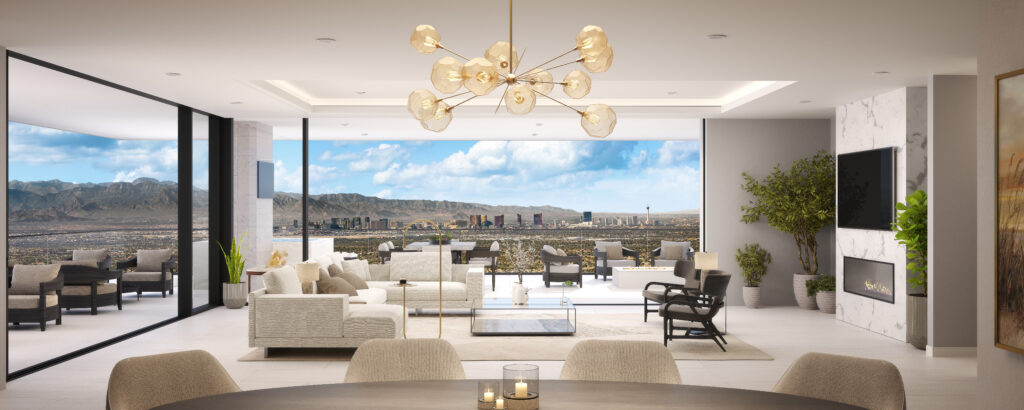
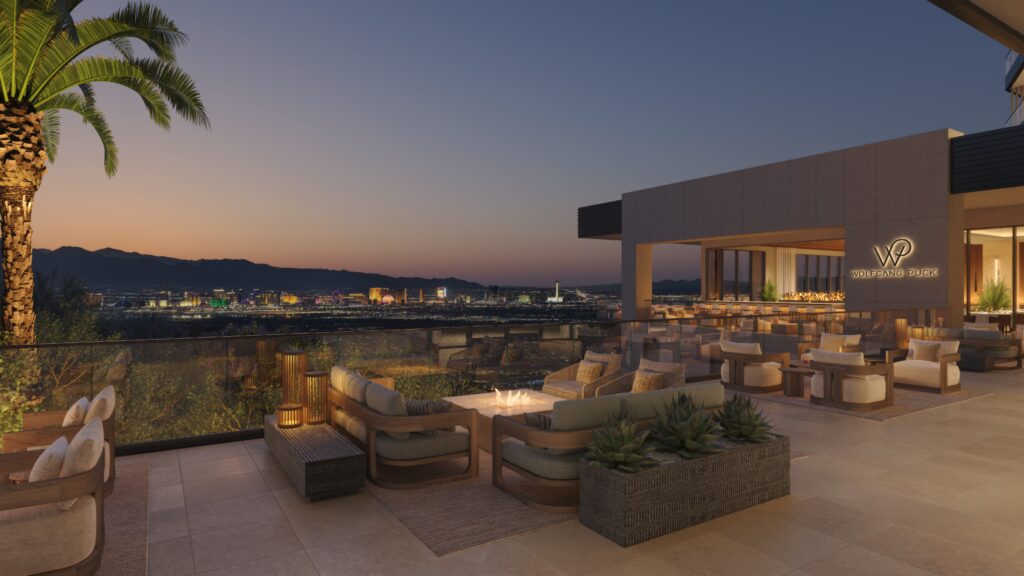
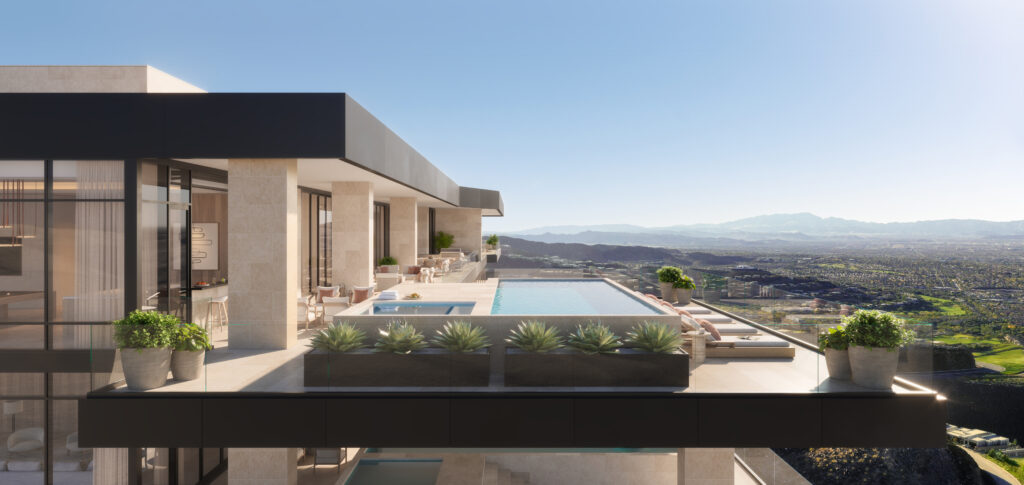
Every great Las Vegas address sells a view, and this one sells the whole show from a safe, sophisticated distance. Perched above the valley, the towers frame the Strip’s neon geometry as scenery rather than backdrop — close enough to feel the city’s pulse, far enough to never have to fight for a parking spot to enjoy it. It’s a subtle but deliberate repositioning: luxury that watches the spectacle instead of living inside it.
That distinction has proven to be the development’s quiet thesis. Buyers writing checks starting at $5.1 million aren’t necessarily looking for proximity to a casino floor. They’re looking for what MacDonald Highlands has offered for years to a smaller, more discreet clientele — privacy, elevation, and a sense of arrival — now paired, for the first time, with the operational polish of a Four Seasons address and the permanence of ownership.
Interiors Without the Glitz
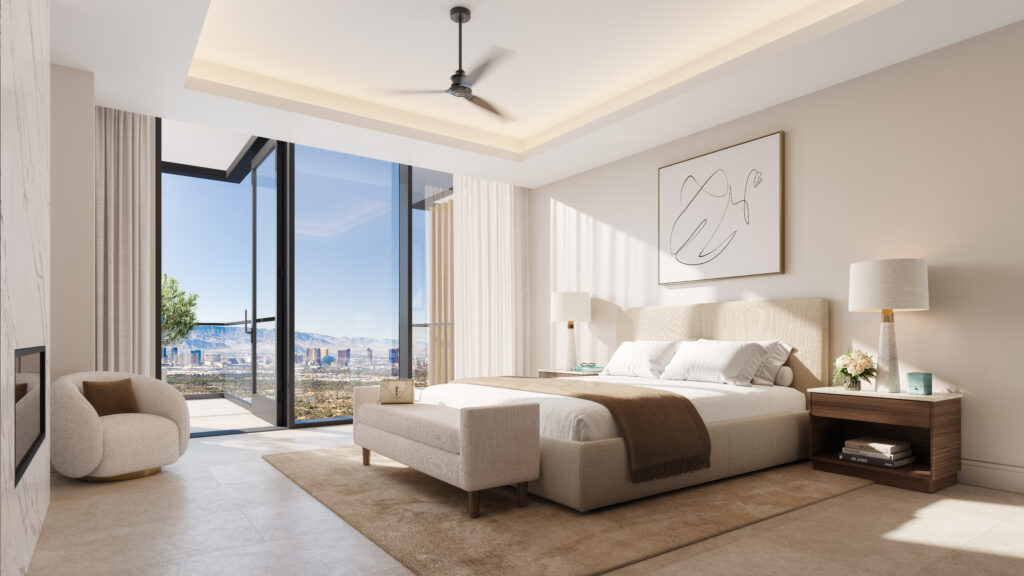
Walk the sales gallery and the first thing you notice is restraint. The 171 residences, spread across two towers, lean on interiors from RH Contract, the design arm of Restoration Hardware — a pairing that trades Vegas’s historical instinct toward maximalism for something closer to a Malibu hillside home that happens to have a view of a casino skyline instead of the Pacific. Stone, wood, and quiet metals do the talking. Nothing sparkles for the sake of sparkling.
It’s a deliberate bet on a different kind of buyer: one who has already done the marble-and-mirrors version of luxury elsewhere and is now shopping for something that reads more like a private club than a nightclub.
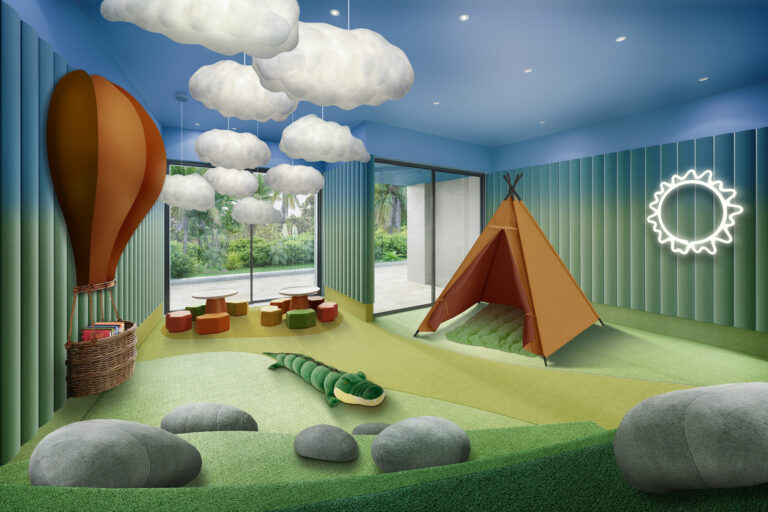
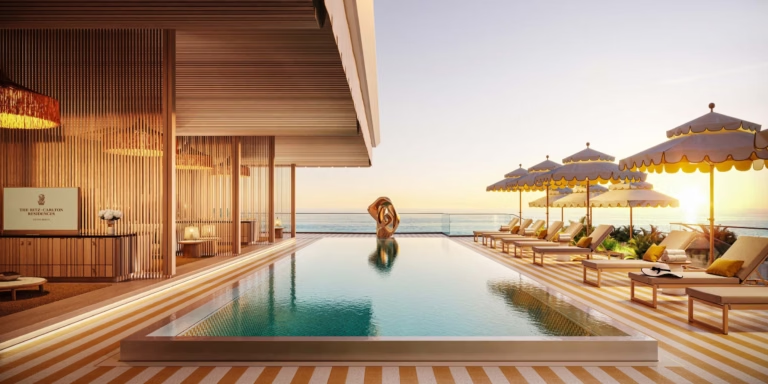
Nearly 90,000 square feet of amenity space — pools, wellness facilities, lounges, and entertaining rooms — is built around that same idea. The building itself is meant to feel like the destination, not merely a place to sleep between destinations.
Wolfgang Puck Moves In
Food, inevitably, is where a Las Vegas project either earns its stripes or gives itself away as an imitation. Here, the development has partnered with Wolfgang Puck Fine Dining Group for an exclusive culinary program built specifically for residents — not a licensed restaurant brand bolted onto the lobby, but a dining experience conceived as part of daily life in the building. In a city built on chef residencies and reservation waitlists, offering that experience as a private amenity is its own kind of status symbol. The dinner party, in this case, comes standard.
Watching It Rise
Construction, led by national builder Suffolk, is now visibly underway, with both towers climbing in tandem above the Henderson foothills. Topping off is targeted for the end of 2026, with keys expected to turn in 2027 — a timeline that has done little to slow sales momentum, and may in fact be helping it. In branded residential real estate, watching a crane confirm a promise tends to be worth more than any rendering.
That momentum says something larger about where Las Vegas real estate is heading. For decades, the city’s luxury story was written in casino resort towers, its residential ambitions treated as an afterthought to the entertainment engine next door. Henderson’s rise — quieter, more residential, more removed from the tourist corridor — suggests a market maturing past its own reputation. The Strip built the city’s fame. Developments like this one may end up building its next tax base.
A New Kind of Vegas Bet
What’s striking about the $850 million milestone isn’t just the number — it’s what it implies about buyer psychology in a city that has spent a century selling excess. Here, the pitch is closer to restraint, service, and elevation, literal and figurative. It’s a bet that the next generation of Las Vegas luxury doesn’t want to be found at the center of the action. It wants a private terrace with a perfect sightline to it.
Two towers in, with cranes still turning above MacDonald Highlands, that bet is looking less like a gamble and more like the house’s new favorite hand.