Hyatt’s Tina Necrason on emerging markets, the death of the amenity checklist, and why the next great branded residence might be an Italian village.

Hyatt’s Tina Necrason on emerging markets, the death of the amenity checklist, and why the next great branded residence might be an Italian village.
|
Getting your Trinity Audio player ready...
|
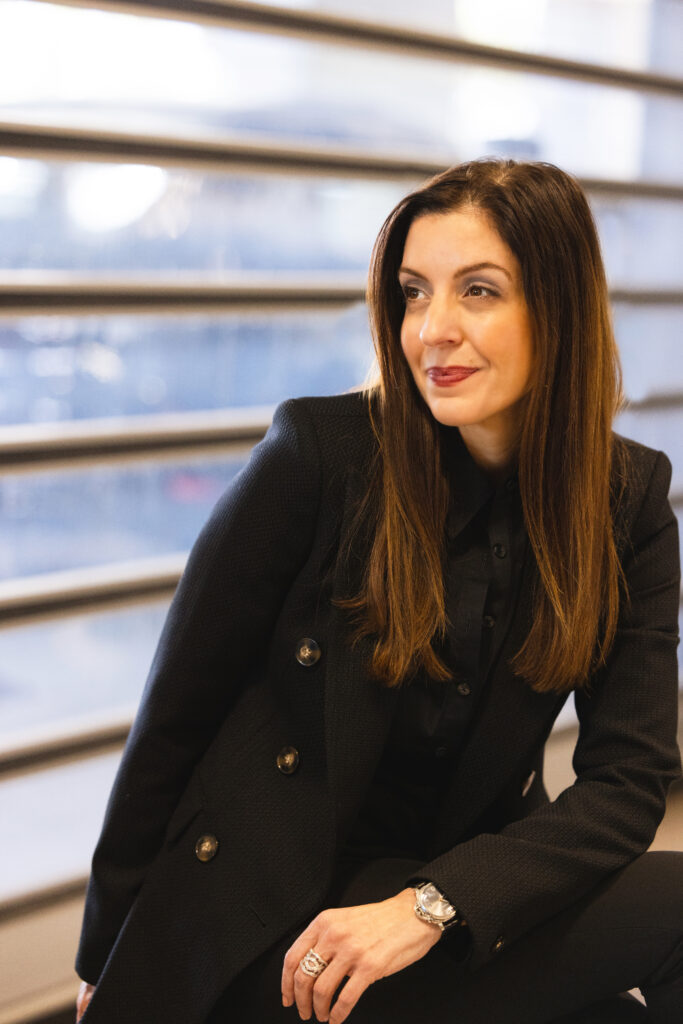
Tina Necrason has spent 25 years at the intersection of hospitality and real estate, working across operator, developer, and lender sides of branded residential before joining Hyatt over a year ago as Global Head of Branded Residential. She arrived at a moment of significant expansion: Hyatt now has more than 50 branded residential properties in its global pipeline, spanning markets from Miami to Mexico City to Southeast Asia. We spoke about how the sector is changing, who is buying, and what it actually means to build a community rather than a condominium.
Tina Necrason is Global Head of Branded Residential at Hyatt. The company’s residential portfolio spans luxury and lifestyle brands across markets in the Americas, Europe, Asia Pacific, and the Middle East.
BL: You’ve been in this sector for 25 years, across the operator, developer, and lender sides. What drew you to Hyatt, and what does this moment in branded residential feel like from the inside?
TN: I’ve been so fortunate to have seen this business from all different angles — sales and marketing, business planning, operations, branding, receivership work during the downturn. And now, as time goes on, the segment is becoming so meaningful as people are diversifying how they desire to live. We’ve seen before covid, during covid, after covid — and these time periods are really defining the future. The transfer of wealth, the multi-generational trends, how people have reprioritized. For someone who has seen the whole trajectory, this is an incredibly exciting point in time to be doing this work.
BL: There’s been a great deal written about the great wealth transfer and shifting generational preferences, younger buyers who are less interested in legacy luxury and more interested in experience and community. How is that changing what Hyatt is building and who it’s building for?
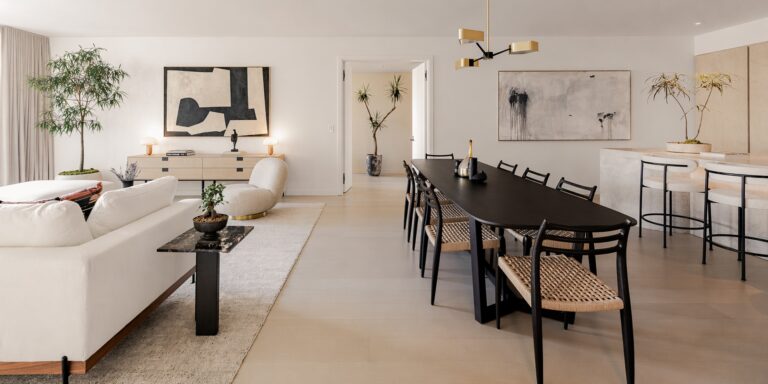
TN: It used to be that people didn’t want to know who their neighbors were. They really wanted to keep to themselves. Now we’re seeing that everyone wants to be together, they still want the privacy and exclusivity within their communities, but they want to grow with each other. I’ve seen it firsthand: families grow together, people are traveling together, and timing when they’re home together. It’s created another dimension that is really personalized. So, we’ve turned it upside down a bit on the amenities side. We’re not just checking boxes anymore. We’re thinking about what actually creates this environment. And that comes through in both the service delivery and how the spaces themselves are designed.
BL: What does that mean in practice when you’re evaluating a new market or project?
TN: It’s quite comprehensive. We’re looking at traditional real estate metrics, but also at how hospitality drivers and pure real estate drivers overlap and converge, since our objectives can differ. We look at location, brand fit, product calibration, and what configurations will resonate in that specific market. And then I’m looking at the very long term: how are people going to live there? How will the HOA be structured? What will carry costs look like relative to real estate value? I probably evaluate 15 or so variables; some quantitative, some qualitative. Does it feel right? What will the hotel programming look like, and does that serve the homeowner? And then very importantly, the developer. If we can feel the alignment and the true partnership from the first introduction, we know we’re probably off to a great start in creating something special.
BL: Where are the markets you’re most excited about right now?
TN: Asia is going to see a real surge in demand for genuinely unique locations. Japan is coming back in a significant way. Singapore, Southeast Asia, Vietnam, Thailand – there is still so much opportunity there. I think we’re going to see pockets of Europe continue to expand, particularly Eastern Europe: Croatia, Montenegro, Romania, Albania, and Greece. And Italy, I think Italy will finally have its time with branded residential. In the US, secondary markets are growing like crazy. Dallas, Houston, and other areas where the market is maturing in ways people didn’t anticipate. Florida is saturated in certain ways, but there are still unexpected pockets. And the Middle East still has a lot of room. The reality is, as people are diversifying their real estate portfolios, looking for places that are meaningful, looking at residency advantages, the universe is opening up greatly.
BL: Ten years from now, what does the competitive landscape look like? Do we see a consolidation back to hospitality brands, or does the sector keep expanding into lifestyle and non-hospitality categories?
TN: There are now over 80 residential brands worldwide, between hospitality and lifestyle, and all other categories. What I think we’ll see in 10 years or sooner is a turn back to hospitality. I think many of those non-hospitality-branded residential projects will revert to hospitality brands over time, because the operational rigor, HOA management, and service platform are very difficult to replicate outside this world. But I do believe a great opportunity will be recognized in mid-markets. You’re going to see all-inclusive residences. You’ll see these other brand tiers start to open up as secondary markets become more attainable. We take the core of what we’ve learned in luxury and redefine it in other spaces. That’s where the growth is headed.
BL: Wellness has become a near-universal claim in branded residential marketing. What separates a genuine wellness offering from a sauna and a gym?
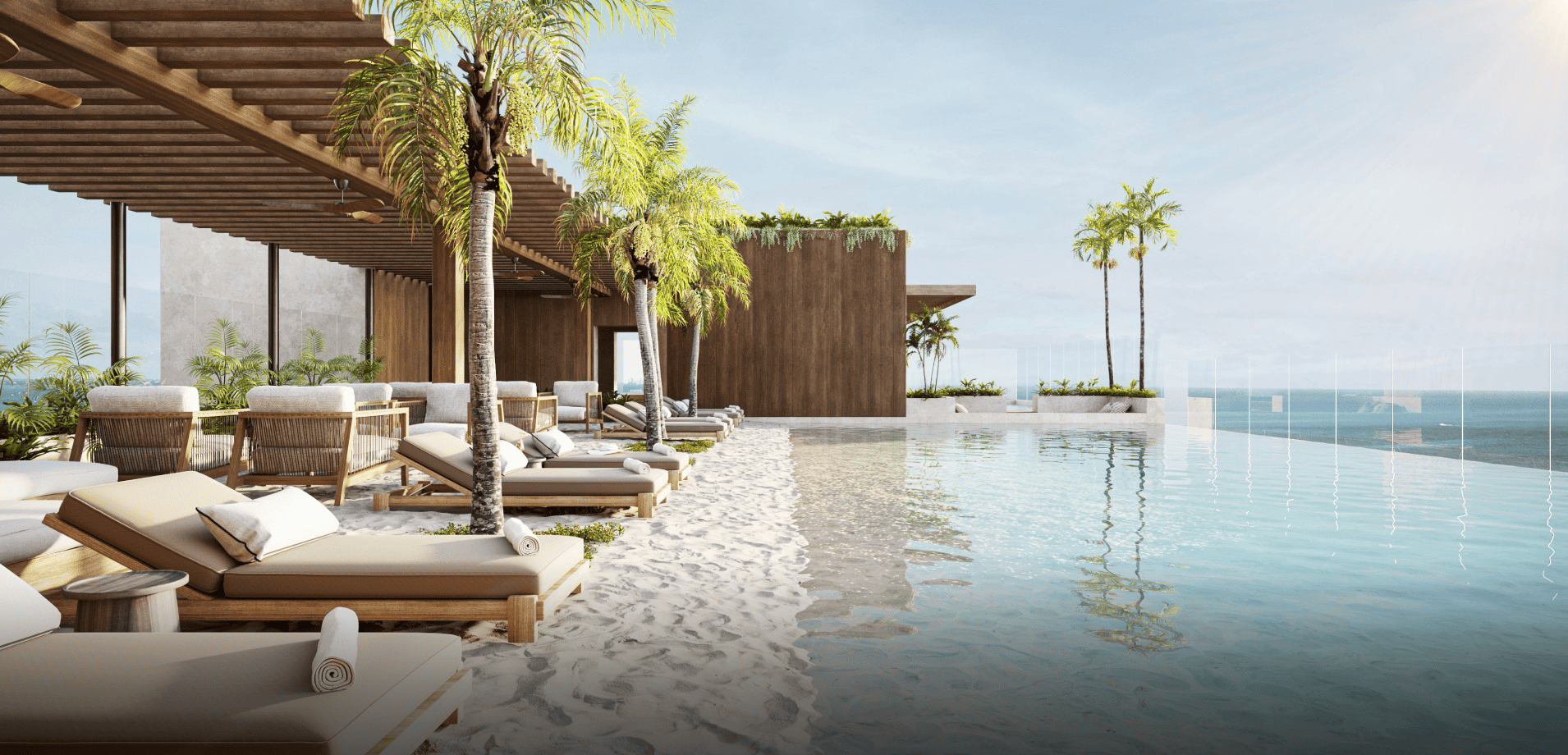
TN: You hit it exactly. Everyone says they have wellness amenities, but if it’s just a sauna and a gym, that’s not wellness, that’s a health club. What we’re focused on is wellness that is embedded rather than bolted on: this could come in the form of air filtration, circadian lighting, the relationship to water, and the connection to the outdoors. Things you don’t necessarily have to try hard to access. You’re simply getting well by being there.
And then you think about families and multiple generations. Thoughtfully designed wellness can speak to a child and a grandparent at the same time. The nutrition, the activity, the outdoor connection — it has an interconnectivity that motivates and inspires all generations at once. That’s what makes it enduring rather than a trend.
BL: There’s a version of branded residential where the brand is essentially a flag of consistency, i.e., the same Cobb salad and the same Bloody Mary wherever you go. And there’s a version where the brand is a passport into a place. How do you hold both?
TN: It’s a fine balance, and it goes back to authenticity. There are buyers who absolutely want that consistency. They have a home in Dubai and a home in Miami, and they want to know that the experience is seamless between them. And then there’s a growing group, particularly as this wealth transfer happens, who want to feel a true sense of place. They want to get off the beaten path, meet their neighbors, and have purpose. The culture has to be part of the DNA and the fabric of the community. And it has to be really thoughtful and respectful. We’re not always the local experts when we come into a market, which is why the developer partnership matters so much. When that works, I’ve seen communities where our residents show up for each other during real adversity. That’s the beautiful thing you can create when you get it right.
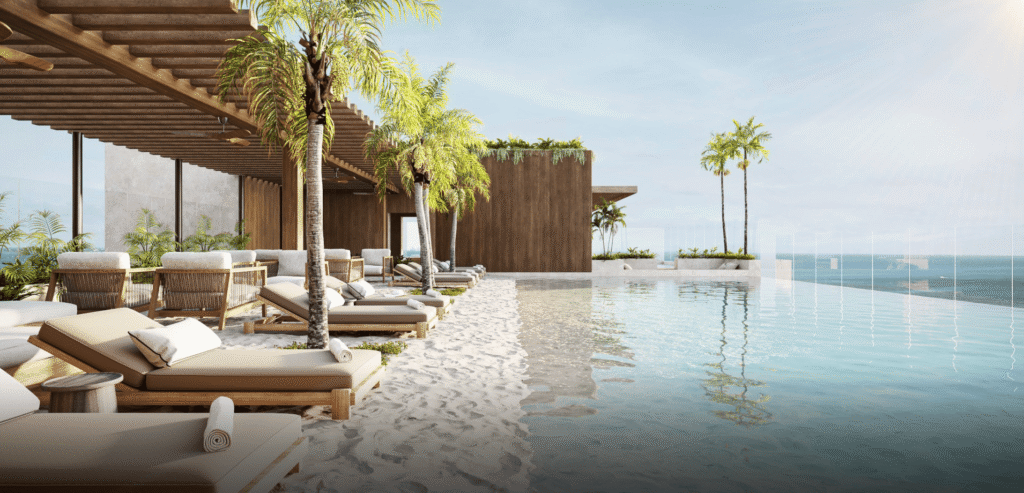
BL: You mentioned earlier that you’re obsessed with a specific property in your own portfolio. Which one, and why?
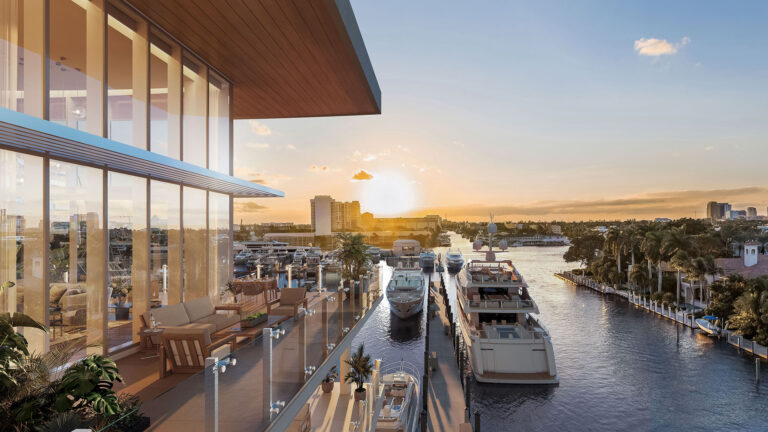
TN: It’s like asking who’s your favorite child. I love all Hyatt’s residences, but for the purposes of this discussion, I’ll choose Thompson Private Residences Puerto Cancun, which is currently under construction. It’s a standalone residential property, and what draws me to it are some of the special attributes like the culture of that area set within an intimate marina community, and I think it just offers so much in terms of diversification of experience. It’s retreat, effortlessness, something my family and future generations could enjoy. The design is incredible. The development partner and their vision are incredible. And the moment I went there, the sense of place just connected with me. It offers exclusivity and access to create memorable experiences in a unique and fully-serviced setting. .
BL: If you could build a branded residence completely outside the Hyatt portfolio, any brand, anything that doesn’t yet exist, what would it be?
TN: I keep coming back to Italy. Tuscany, in particular. A village, not a resort, not a condominium tower, a village that is centrally located enough that in one to three hours you have the world at your disposal, but where you can also simply be. The cheese shop, the wine, the olive oil, the gelato, and a church on the property. Things for children and things for grandparents and access to unbelievable pursuits and collaborations. History, but with a modern interpretation and appreciation. And intimate, not big. The exclusivity and the intimacy are what drive real estate value at the end, but they’re also what drive meaning. And above all, the people. To live in a place where the absolute best staff and team are there for you and your family for years and years, and they get to know you, and you get to know them. That is where the magic happens.
Tina Necrason is Global Head of Branded Residential at Hyatt. With more than 50 branded residential properties in the global pipeline, including forthcoming projects in Indonesia, Japan, Thailand, and across the Americas, Hyatt’s residential footprint continues to expand across both its luxury beacon brands and lifestyle portfolio. Learn more at hyatt.com.