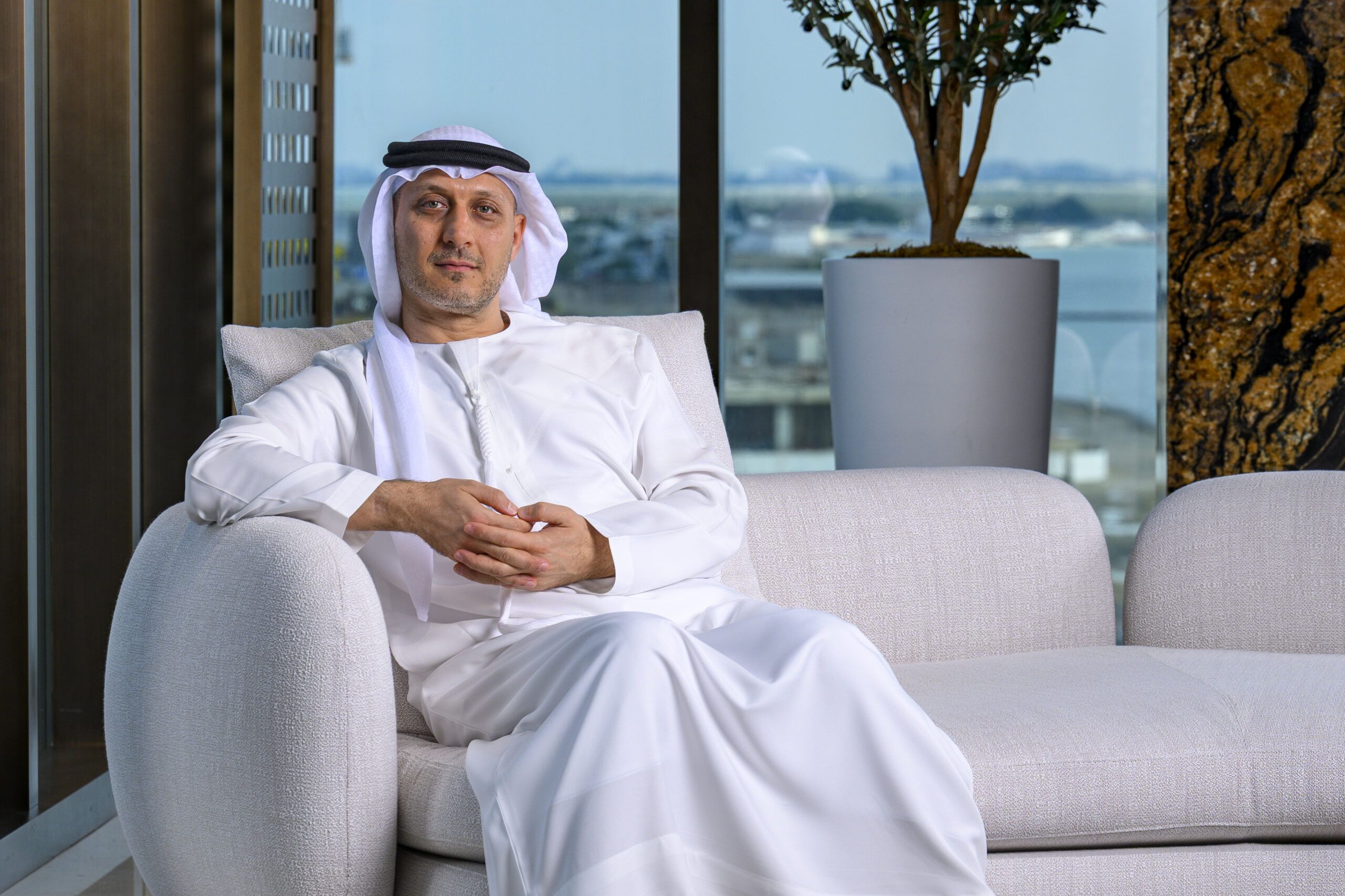
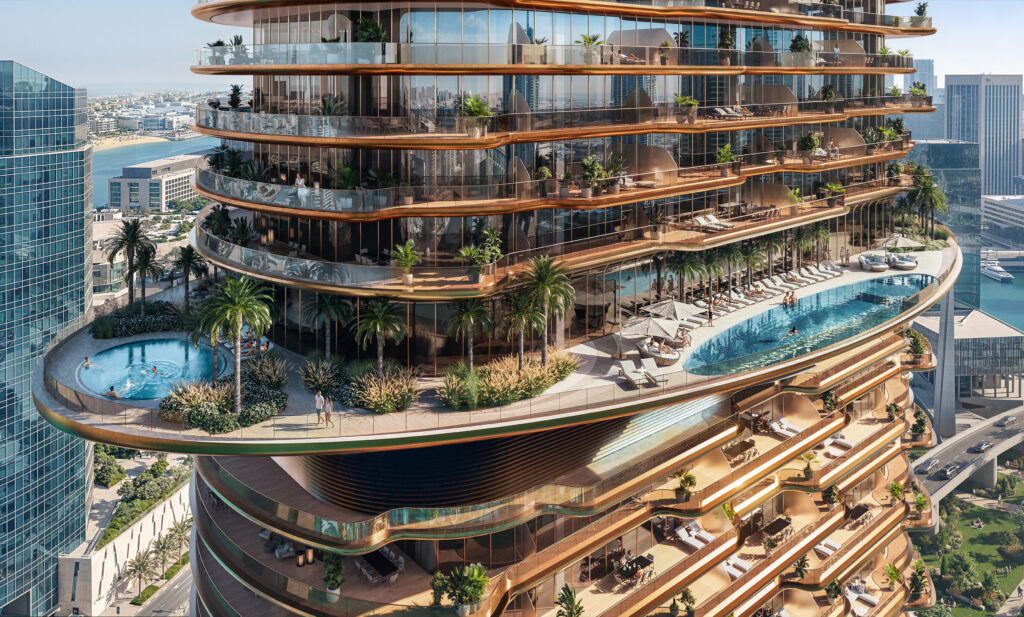
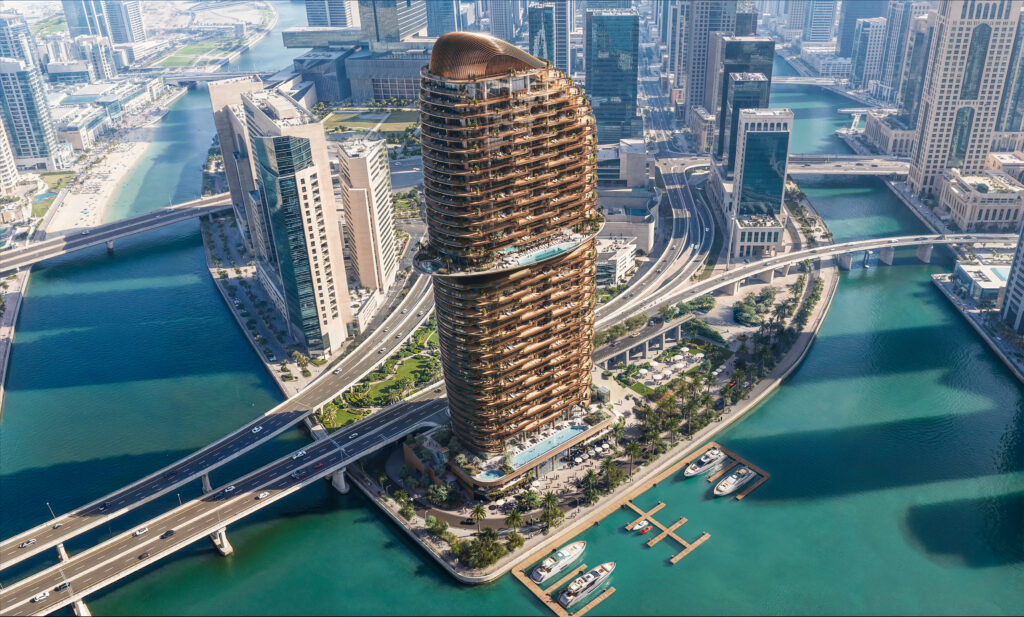
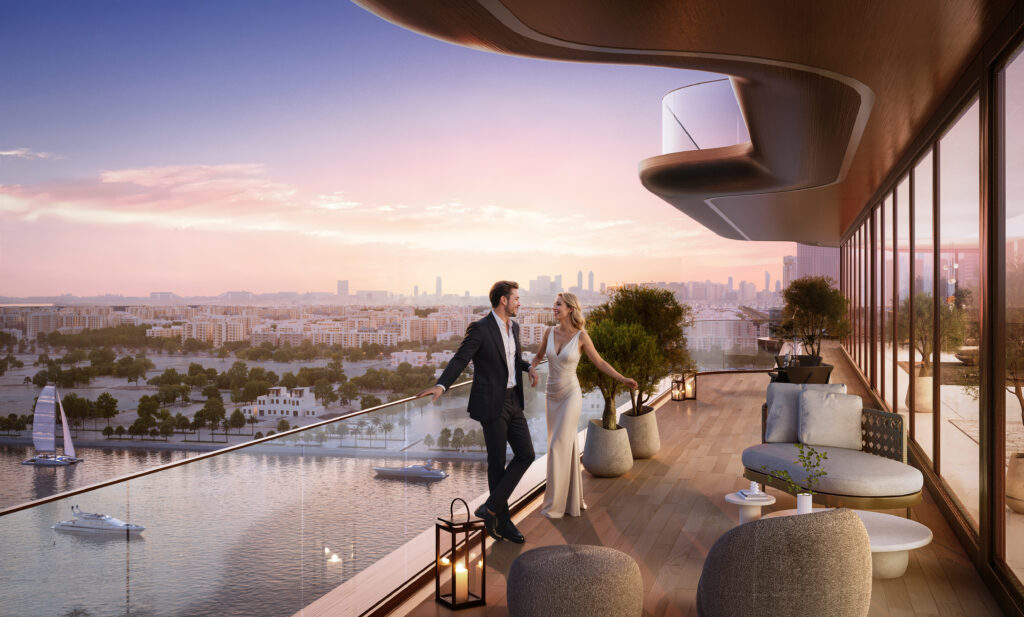
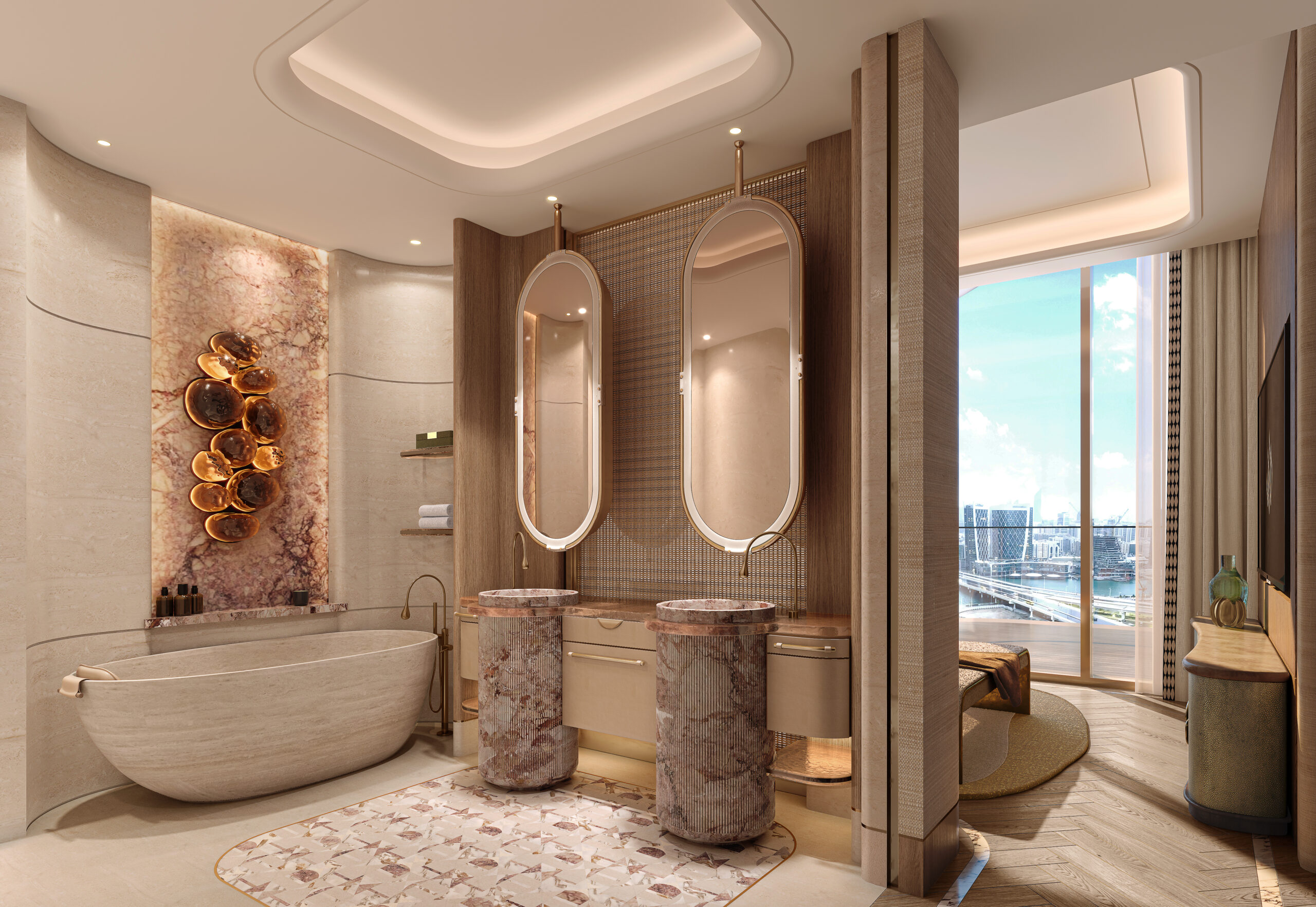
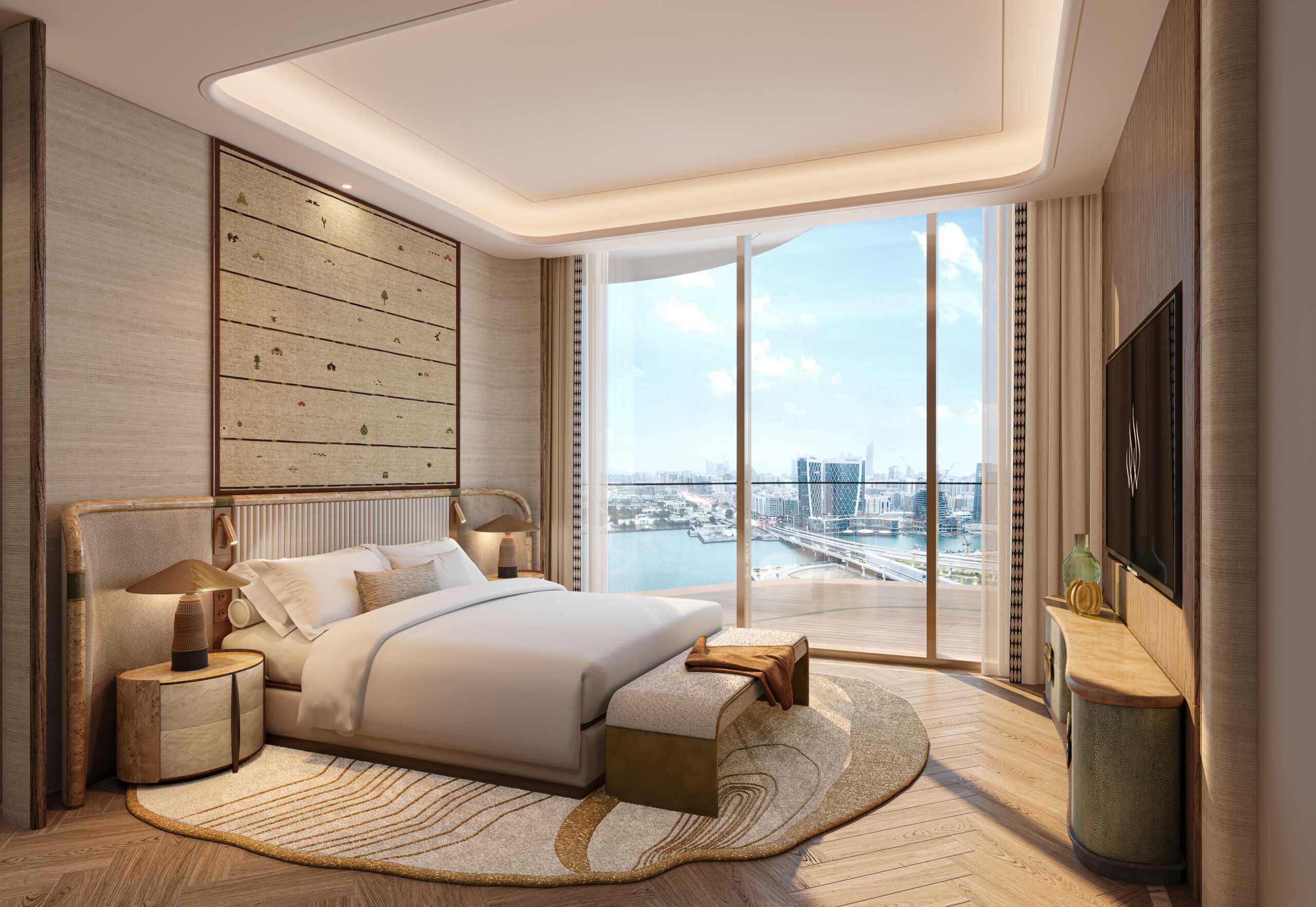
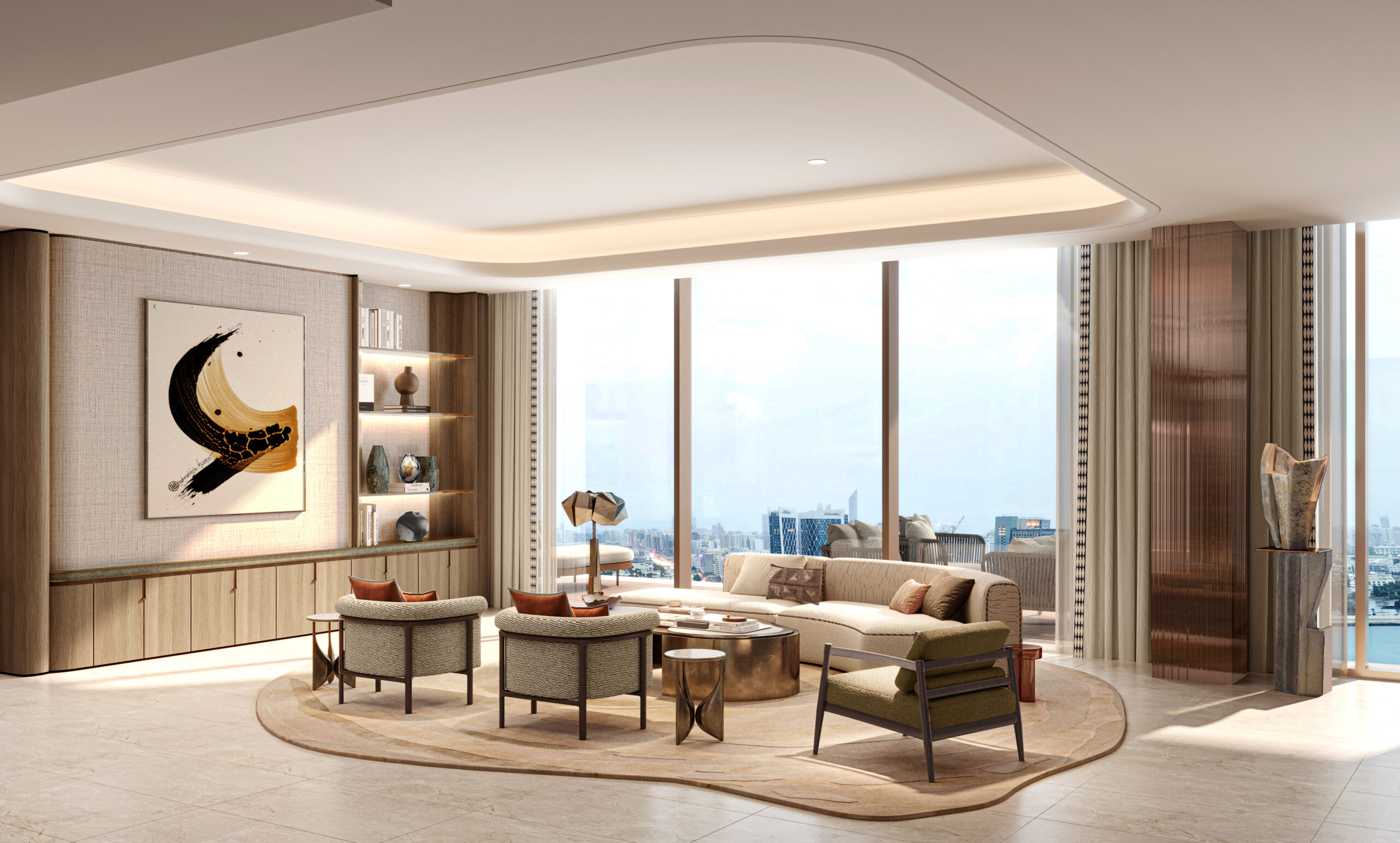
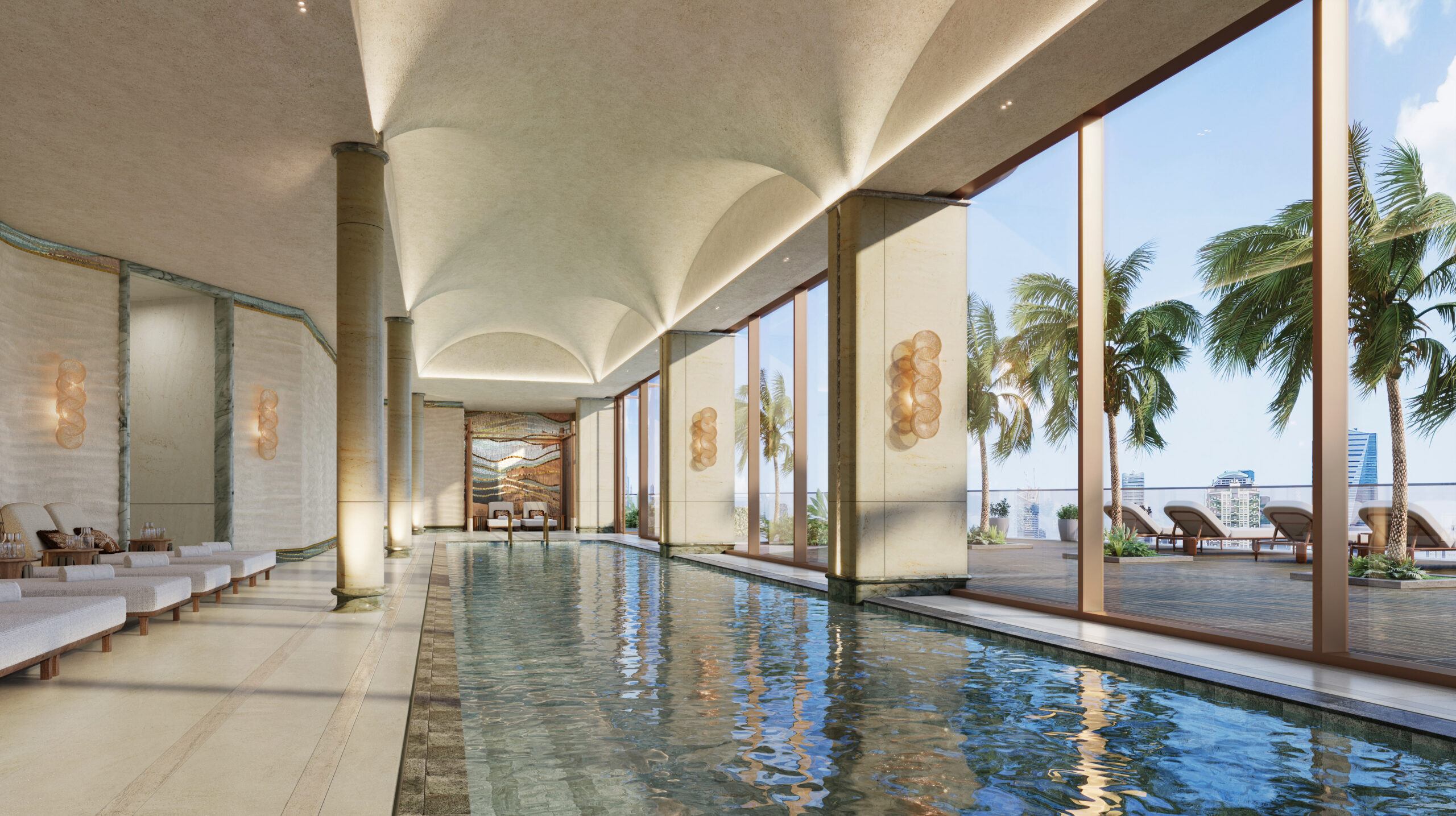
Tareq Siam has spent the last twelve months executing one of the most ambitious development programmes in the UAE. In that time, Emirates Developmentshas brought four distinct branded partnerships to market across two emirates: Hilton Residences JLT in Dubai, Stellar by ELIE SAAB on Yas Island, Hilton Residences Abu Dhabi Al Raha, and now Jumeirah Residences Al Maryah Island — the company’s most significant project to date. Developed in partnership with Jumeirah and designed by Shaun Killa, the 253-residence tower on Al Maryah Island is scheduled to open in 2031, and was unveiled at Louvre Abu Dhabion January 28 to more than 700 guests.
We sat down with Siam shortly after the launch.
Branded Living: Abu Dhabi and Dubai are often discussed in the same breath. You seem to be arguing they shouldn’t be.
Tareq Siam: Abu Dhabi attracts a fundamentally different buyer profile, and this project was shaped around that reality from day one. The resident choosing Abu Dhabi, and specifically Al Maryah Island, over Palm Jumeirah is typically someone who values culture, discretion, long-term value, and a sense of community over visibility or spectacle.
Al Maryah Island offers a very specific proposition. It sits at the intersection of business, lifestyle, and culture — direct proximity to Abu Dhabi Global Market, The Galleria, Cleveland Clinic, and the broader cultural ecosystem that includes the Louvre and the upcoming Guggenheim on Saadiyat. The resident this project was designed for wants a sophisticated, understated waterfront address rather than a performative one. They want genuine hospitality services from a globally recognised brand like Jumeirah, but delivered in a way that feels residential rather than hotel-like.
This isn’t about Abu Dhabi versus Dubai — both markets are strong and serve different lifestyles. But Abu Dhabi’s proposition is uniquely compelling: measured growth, quality infrastructure, cultural depth, and long-term certainty.
BL: With a 2031 delivery, what are you telling investors that justifies a five-year horizon?
TS: The key point is that Abu Dhabi is not a speculative market. It is a fundamentals-driven market. A five-year horizon is not a risk here; it is part of the value proposition.
The emirate’s economy is diversified well beyond oil. ADGM continues to mature as a global financial hub, Yas Island draws more than 25 million visitors annually, and cultural institutions like the Louvre and the Guggenheim are long-term assets. The five-year horizon works in the buyer’s favour — Al Maryah Island is still evolving, and its value will continue to appreciate as the masterplan matures. By 2031, the island will be significantly more developed across retail, dining, cultural, and commercial offerings.
The Jumeirah partnership adds another layer of confidence. This is one of the world’s most established luxury hospitality groups, not a speculative licensing arrangement. And our own track record — Hilton Residences JLT, Stellar by ELIE SAAB, Hilton Residences Abu Dhabi Al Raha — demonstrates execution capability across multiple branded partnerships.
BL: You chose Shaun Killa, the architect behind the Museum of the Future. What does that choice say about how you see this project?
TS: It says that branded residences should aspire to landmark status — that architectural ambition should be integral, not secondary to finishes or branding.
Shaun’s framing of the building is telling. He describes it as architecture shaped by light, movement, and emotion. It responds to Abu Dhabi’s waterfront context, evolves throughout the day as the light shifts, and becomes a luminous presence on the skyline at night. The building contributes to Abu Dhabi’s cultural and design narrative, not just its residential market.
BL: The launch was held at the Louvre. Katy Perry performed. That’s a significant statement for a residential project.
TS: Cultural capital is absolutely central to the identity of this project. The choice of the Louvre wasn’t about finding a striking venue — it was about aligning the project with what Abu Dhabi represents today and where it is heading.
Abu Dhabi is intentionally building its identity around culture, design, and intellectual capital. Institutions like the Louvre, the Guggenheim, Berklee Abu Dhabi, and the Natural History Museum are foundational elements of the city’s long-term vision, not branding exercises. The launch was designed to make one thing clear: branded residences can be cultural moments, not just sales events. For buyers, that positioning creates intangible value. It is about belonging to a city that places real emphasis on design, art, and quality of life.
BL: What does this project mean for the UAE branded residence market more broadly?
TS: It raises the bar across several dimensions. Architecturally, it reinforces that landmark ambition should be part of every serious branded residential project. From a partnership perspective, Jumeirah is the UAE’s own global luxury hospitality brand — working with a local developer on a flagship project in the capital. That makes this a distinctly UAE story: confident, mature, and internationally relevant.
Location strategy is also shifting. Al Maryah Island represents a move toward culturally significant, mixed-use urban districts rather than a reliance on beachfront or marina views alone.
More broadly, this project makes an argument that Abu Dhabi can compete directly with Dubai’s branded residence market. Not by imitating it — but on its own terms.
Jumeirah Residences Al Maryah Island is scheduled for delivery in 2031. Emirates Developments’ previous projects include Hilton Residences JLT, Stellar by ELIE SAAB, and Hilton Residences Abu Dhabi Al Raha.